The Story
Why it exists.
The beginning
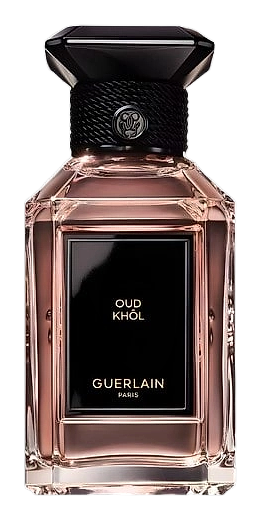
Oud Khôl began as an exploration of the color black itself, translated into olfactory terms. Not smoky, not sweet, not woody, black, in its absolute form. The fragrance reaches for oud the way a painter reaches for kohl liner: to create depth, to outline the shadows, to make something already intense hit harder. The aldehydes function as the amplifier, the enhancer, the thing that takes a good oud and forces it into something unrepeatable. They arrive on the skin with a crystalline shimmer that cuts through the darkness like a precisely drawn line, giving the composition its initial brilliance. As the scent develops, the oud reveals itself in waves of resinous warmth, its deep, almost hypnotic quality becoming the dominant presence.
What makes this composition unusual is the relationship between the aldehydes and the oud. In most aldehydic fragrances, aldehydes provide brightness, a lift, a sparkle, a champagne effervescence. Here, Wasser has found the dark side of the aldehyde molecule. These aldehydes don't open a fragrance. They magnify it. The oud doesn't become sweet or more accessible under their influence, it becomes denser, darker, more resinous. Some reviewers describe it as tar. Others say charcoal. The truth is closer to both: an oud that reads as visual darkness rather than scent. The praline is the counterweight, the Guerlain signature move.
The evolution
The aldehydes announce themselves first, and they do not apologize. There is no gentle transition, the opening is crystalline, sharp, almost metallic. But the kind of sharp that feels intentional rather than aggressive. Within minutes, the oud begins to emerge from underneath, not replacing the aldehydes but joining them in a strange harmonic. The effect is not bright. It is dark, resinous, slightly smoky, like looking at something through smoked glass. The leather follows, adding a refined animalic quality that keeps the oud from becoming purely woody. And then, surprisingly, the praline. A soft, edible sweetness that threads through the darkness like a question. The moss is there throughout, a mineral undertone that keeps the composition grounded in something real. By the third hour, the aldehydes have settled into the background. The oud is now the dominant voice, but softened, not weaker, just more comfortable.
Cultural impact
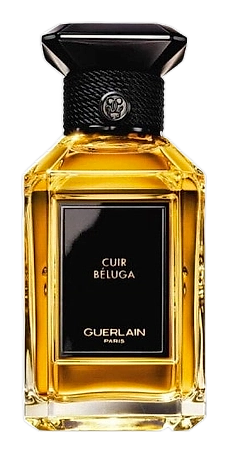
Oud Khôl joins Cuir Béluga and others in the L'Art & La Matière collection as a statement of creative intent. The aldehyde-oud combination here creates something that defies easy categorization, a fragrance that refuses to sit comfortably within any single trend. It exists in a space between classical perfumery and contemporary boldness, between the refined and the raw. The aldehydes lend a shimmering quality that catches light and draws attention, while the oud anchors the composition with something ancient and profound.