
The Story
Why it exists.
The beginning
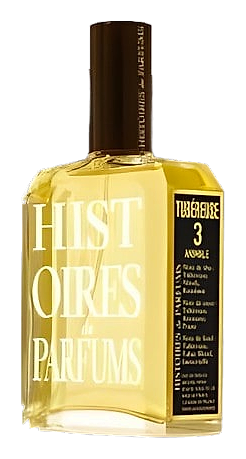
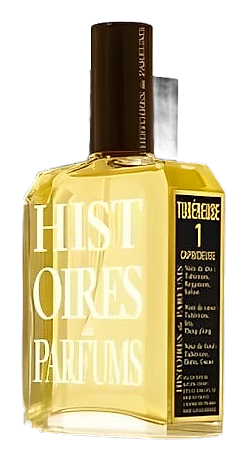
La Capricieuse is the opening chapter of Histoires de Parfums' tuberose triptych, a collection built around a single flower dissected three ways. The name is the brief: capricious, unpredictable, designed to resist a single reading. Gérald Ghislain built this first interpretation around contrast: powder against leather, warmth against spice, the indolic push of tuberose held in check by something cooler, something that makes you lean in to catch it.
Tuberose appears three times across the pyramid, top, heart, base. That's unusual. Most fragrances feature a note once, as a passing reference. Here, it's the throughline, the voice that keeps returning even when you think it's finished. The suede base does something unexpected: it doesn't soften the tuberose, it frames it. Like placing a wildflower in a leather-bound book. Iris adds the powdery violet lift that keeps the whole thing from becoming too heavy. Cocoa gives warmth without sweetness, a dry, almost bitter cocoa that reads more mineral than dessert.
The evolution
Opens bright and citrusy, bergamot first, then the saffron arrives with its peppery warmth. The tuberose shows its hand early, but holds back. The iris appears within the first half hour, shifting the energy from floral-spicy to something softer, morepowdered. By the second hour, the ylang-ylang has added a tropical creaminess underneath, but the cocoa and suede are already creeping in from below. The drydown is where it earns its name: the tuberose doesn't disappear, it settles beneath the suede, becomes something warmer, closer, more animal. Lasts 8-10 hours on most skin. The next morning, a faint cocoa-tuberose warmth remains on fabric.
Cultural impact
Part of the house's Tubéreuse trio, La Capricieuse occupies the gourmand-powdery corner of that collection, contrasting with the romantic Virginale and the animalic Animale. It appeals to wearers who want tuberose's richness without the full-throttle intensity it can sometimes deliver. The suede and cocoa elements give it a mature quality that distinguishes it from more straightforward white floral interpretations.