The Story
Why it exists.
The beginning
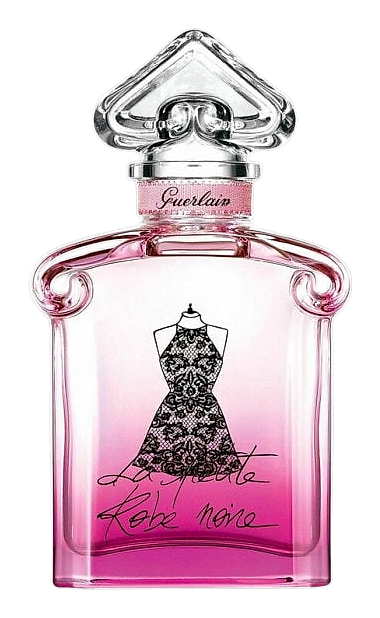
The La Petite Robe Noire line reads like a wardrobe pulled straight from a Parisian dressing room. Each flanker is a different dress, a different mood, a different version of the same woman. Ma Robe Hippie-Chic is one of the more bohemian entries, composed by Thierry Wasser. The concept is simple enough to say out loud. The little black dress gets a flower-child twist, trading structured elegance for something looser, fresher, more alive. The silhouette changes. The spirit stays recognizable. This is the LPRN you wear when the hem has wildflowers stitched into it, when the night smells like cut grass and warm skin instead of lipstick and champagne. There's a deliberate lightness in how the composition opens, almost airy, almost careless, but every element earns its place.
What makes Ma Robe Hippie-Chic interesting is what's been stripped away. Where the original La Petite Robe Noire tends toward gourmand warmth, here the layers have been pulled back to let the cherry and rose breathe without the usual sugary weight. The structure is deliberately lighter, almost architectural in its restraint: cherry on top, rose at the center, and a dry, meditative base of tonka and black tea that anchors everything without smothering it. The black tea is the surprise.
The evolution
The first spray is almost indecent in its directness. Cherry, bright and slightly syrupy, hits immediately, underscored by a whisper of rose water that lifts it away from anything resembling cough syrup. The rose water does something subtle but essential: it adds transparency, a sense of lift, so the cherry reads more like fruit than like candy. Then the composition breathes. The rose takes center stage, but it's not the dense, velvety rose of a winter floral arrangement. It's lighter, closer to rose water than to rose absolute, the memory of petals pressed in a book rather than a bouquet on a table. The whole opening stays surprisingly clean for a while. Then something shifts. The tonka bean arrives quietly, almost imperceptibly, bringing a soft warmth that rounds out the sweetness without inflating it.
Cultural impact
Within the La Petite Robe Noire lineup, Ma Robe Hippie-Chic has earned a quiet following for the way it trims back the usual sweetness and lets cherry and rose breathe. Black tea does the grounding here, and tonka warms underneath without overwhelming. Wearers who know the line tend to reach for it on the days they want something gentler, something that won't announce itself across a room. It wears close enough for the office, soft enough for a daytime date, and quiet enough that it rarely offends.
The House
GuerlainGuerlain stands as one of the oldest and most revered perfume houses in the world, founded in Paris in 1828 by Pierre-François-Pascal Guerlain. What began as a boutique on rue de Rivoli quickly became the preferred destination for Parisian society, attracting dandies and elegant women who sought custom-crafted fragrances. The house's influence grew to such heights that Guerlain earned the title of Official Perfumer to Napoleon III after presenting Eau de Cologne Impériale to Empress Eugénie as a wedding gift in 1853. This royal patronage marked the beginning of Guerlain's enduring association with European aristocracy, as the house went on to create fragrances for Queen Victoria and Queen Isabella II of Spain. Today, under the creative direction of Thierry Wasser, the fifth-generation perfumer, Guerlain continues to shape the landscape of fine fragrance with a portfolio spanning over 1,100 olfactory creations. The house remains headquartered at its legendary Champs-Élysées mansion, a historic monument that anchors Guerlain's position at the intersection of heritage and contemporary luxury.
The Creator
Thierry WasserWasser gravitates toward green, crispy notes and the bold florals Guerlain is known for. Bulgarian rose appears repeatedly in his work, and he travels annually to oversee the harvest in Kazanlak.