
The Story
Why it exists.
The beginning
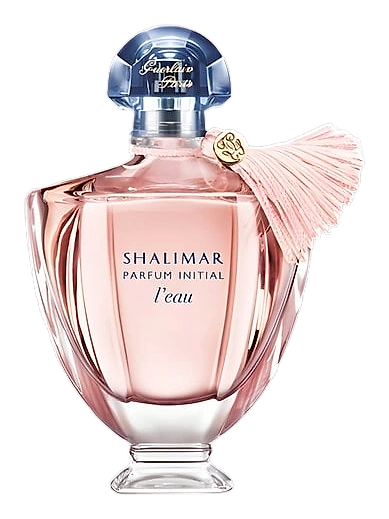
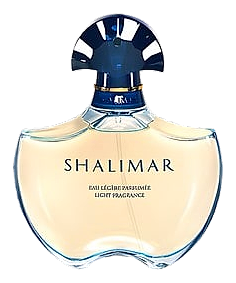
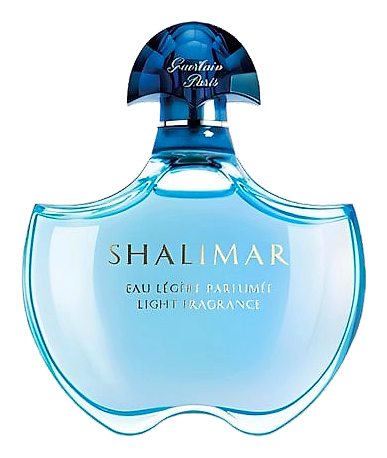
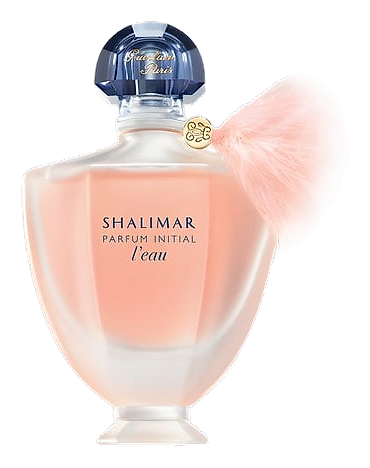
In 2013, Guerlain gave the Shalimar Parfum Initial line another chapter, L'Eau Si Sensuelle, a collector's edition with a matte glass flacon and powdery pink feathers at its throat. Thierry Wasser, the house's current perfumer, composed it as a softer, more intimate interpretation of what came before. The name itself is a statement: si douce, si sensible. This was not the Shalimar for an entrance. This was the Shalimar for after.
The pyramid is built on an unusual tension, citrus that arrives bright and tart, then surrenders almost immediately to a powdery floral heart. Iris does the heavy lifting here, its violet-starch quality giving the composition its distinctive texture. Jasmine and rose soften what could have been clinical. Vanilla and tonka bean anchor everything in warmth, but never let it become heavy. What makes this composition work is the hand-off: the bergamot doesn't linger, the florals arrive exactly when the citrus begins to fade. It's composed like a conversation that knows when to stop talking.
The evolution
The first twenty minutes are all citrus, bergamot and grapefruit with a green bite that reads almost tart. Neroli adds a slight bitter-floral edge, keeping the opening from becoming sweet. Then the iris arrives, and the whole character shifts. What was sharp becomes soft. What was bright becomes intimate. The jasmine and rose don't announce themselves so much as settle in around the iris, adding warmth without sweetness. By hour three, vanilla and tonka bean have taken over. The drydown is powdery in the most literal sense, soft, close, and warm against skin. On fabric, it lingers longer than on skin, a quiet reminder hours later.
Cultural impact
This collector's edition from 2013 has become harder to find as production ceased, which has only sharpened the interest of those who remember it. The fragrance occupies a specific niche within Guerlain's catalog, a softer, more powdery interpretation of the Shalimar lineage that leans into the iris and vanilla rather than the oriental base of the original. For Guerlain collectors and those who discovered it before discontinuation, it represents a particular moment in the house's modern era, composed by Wasser during a period when he was establishing his own relationship with the brand's most iconic materials.
The House
GuerlainGuerlain stands as one of the oldest and most revered perfume houses in the world, founded in Paris in 1828 by Pierre-François-Pascal Guerlain. What began as a boutique on rue de Rivoli quickly became the preferred destination for Parisian society, attracting dandies and elegant women who sought custom-crafted fragrances. The house's influence grew to such heights that Guerlain earned the title of Official Perfumer to Napoleon III after presenting Eau de Cologne Impériale to Empress Eugénie as a wedding gift in 1853. This royal patronage marked the beginning of Guerlain's enduring association with European aristocracy, as the house went on to create fragrances for Queen Victoria and Queen Isabella II of Spain. Today, under the creative direction of Thierry Wasser, the fifth-generation perfumer, Guerlain continues to shape the landscape of fine fragrance with a portfolio spanning over 1,100 olfactory creations. The house remains headquartered at its legendary Champs-Élysées mansion, a historic monument that anchors Guerlain's position at the intersection of heritage and contemporary luxury.
The Creator
Thierry WasserWasser gravitates toward green, crispy notes and the bold florals Guerlain is known for. Bulgarian rose appears repeatedly in his work, and he travels annually to oversee the harvest in Kazanlak.