The Story
Why it exists.
The beginning
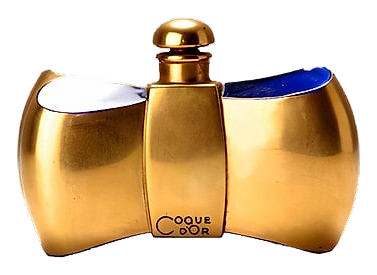
Coque d'Or launched in 2014 as a limited re-edition of a 1937 Guerlain fragrance created by Jacques Guerlain. The original was named after Nikolai Rimsky-Korsakov's opera Scheherazade, its French title meaning 'golden shell.' Jacques Guerlain dedicated it to Sergei Diaghilev, founder of Ballets Russes. The perfume arrived in cobalt blue Baccarat bottles shaped like bows, coated in gold and designed by Jean-Michel Franck. In 2014, Thierry Wasser revisited this archive formula and adapted it to meet modern IFRA safety standards, releasing only 29 pieces in the original vintage bottles.
The aldehydes are the tell. Not a supporting player, not a nod to the past. They structure the entire composition, giving the opening its effervescent, almost effervescent quality while the fruity notes beneath read warm rather than fresh. Carnation and jasmine form a floral heart with a waxy, slightly spiced character that belongs to a different era of perfumery. The base is where the difference becomes unmistakable. Civet and moss form the backbone of a drydown that modern perfumery largely abandoned, replaced by cleaner musks and lighter woods. Vanilla softens what could be harsh, but never drowns it. The result is a fragrance that asks something of the wearer. Attention. Patience.
The evolution
The opening announces itself without apology. Aldehydes surge first, bright and almost medicinal, the smell of powder and warm metal that defines vintage French perfumery. Bergamot and star anise arrive together, the anise sharp enough to catch your attention before the fruity notes soften everything into something rounder. Lavender lingers at the edges. The aldehydes never fully recede, but they do soften as the heart takes over. Jasmine and carnation emerge with a waxy, slightly spiced quality. Cyclamen and orris root add powdery depth. The floral heart feels old-fashioned in the best sense. Structured. Deliberate. The drydown is where Coque d'Or earns its reputation. Vanilla wraps around the florals like a warm hand. Moss and civet ground everything with an earthy, animalic presence that modern perfumery has largely abandoned. This is the part that lasts for hours. That stays on skin the next morning. That smells like something no longer made.
Cultural impact
Coque d'Or belongs to a select series where Guerlain revives its most coveted vintage formulas in original Baccarat bottles for serious collectors. The 2014 reissue sparked conversation in niche fragrance communities about what gets lost when bold vintage materials are reformulated away. Wasser navigated that tension carefully, keeping the aldehydes prominent and the civet intact. The result became a quiet reference point for what Thierry Wasser manages to preserve when most houses have walked away from these materials entirely.