
The Story
Why it exists.
The beginning
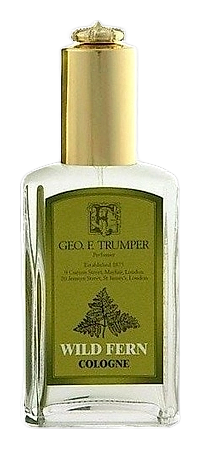
Geo. F. Trumper opened on Curzon Street in 1875, two years before Wild Fern arrived in 1877. By then the house had mastered the hot-towel shave and wanted a fragrance that extended that ritual beyond the barber's chair. The brief was simple: a scent that smelled like the understory of an English forest after rain, where ferns grow thick and the air is cool and green. Lavender, bergamot, and rosemary were chosen for their clean, aromatic qualities, meant to evoke the barber's art. The fougere heart was added to give weight and sophistication. Oakmoss and musk anchored the base, ensuring the fragrance lingered on skin throughout the day, no different than a well-cut suit should hold its shape.
Geo. F. Trumper's approach to note selection was never about trend. Wild Fern uses lavender and bergamot because they were clean, masculine, and barber-appropriate. Rosemary and basil add an herbal dimension that grounds the citrus and prevents it from becoming sweet. The fougere heart, built around geranium and carnation, was chosen to bridge the fresh opening and the earthy base. Oakmoss and patchouli were the obvious anchors for a house that valued permanence and tradition. The pairing is logical: each stage supports the next, creating a fragrance that evolves without startling. This is not experimentation. This is craft.
The evolution
The fragrance opens with bergamot and basil, bright and citrus-forward, before lavender and rosemary establish the aromatic character. Within minutes the bergamot softens and the fougere notes emerge, with geranium and carnation creating a green, slightly spiced floral heart. This transition feels deliberate, like watching a barber work through the stages of a shave. As the heart settles, oakmoss rises from underneath, bringing an earthy depth that gradually absorbs the florals. Musk and patchouli complete the drydown, wrapping the skin in a warm, woody embrace that endures long after the initial brightness has faded. The entire arc reads like a story: crisp introduction, complex middle, grounded conclusion.
Cultural impact
Wild Fern remains a staple of classic British fougère, still produced after more than a century. Collectors cite it as the benchmark for green, herbaceous colognes, often compared to Houbigant’s original Fougere Royale. Its steady presence on vintage shelves shows a quiet reverence among enthusiasts who value heritage over trend, making it a go‑to for gentlemen seeking understated elegance.