
The Story
Why it exists.
The beginning
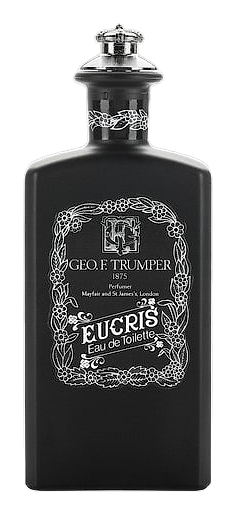
Eucris arrived in 1912 as Geo. F. Trumper's answer to a specific problem: how to make a men's fragrance that was complex without being loud. The earlier Trumper colognes, Astor, Curzon, Lavender Water, were simpler constructions, built around citrus and single botanical notes. Eucris was different. It introduced a darker, more layered profile that set it apart from the standard-issue colognes of the era. The choice of blackcurrant as a leading note was unusual for a men's fragrance in 1912, it brought a wine-like depth rather than the expected fresh or green character. Caraway and coriander amplified the aromatic complexity, creating an opening that was simultaneously fresh and warm. The jasmine and lily of the valley heart kept it grounded in refinement, while the oakmoss and sandalwood base gave it the kind of lasting depth that didn't require volume to announce itself.
The blackcurrant-caraway pairing is the tell. It's an unusual combination, fruit and spice working together in a way that feels both natural and slightly unexpected. Blackcurrant brings a sharp, almost wine-like quality that's fruity without being sweet. Caraway adds an herbal, slightly medicinal complexity that elevates the note beyond simple fruitiness. Together, they create an opening that is simultaneously fresh and warm, approachable yet distinctive. This aromatic interplay in the top is what gives Eucris its character: it's the kind of fragrance that rewards attention without demanding it.
The evolution
The opening hits first, blackcurrant's sharp fruitiness over caraway's aromatic spice. There's an immediate complexity here, a brightness that doesn't feel manufactured. The coriander adds a clean, slightly peppery warmth that keeps the blackcurrant from reading too sweet. This first hour is the fragrance's most assertive moment, though even then it's never loud. The heart phase arrives gradually, jasmine's waxy sweetness softened by lily of the valley's delicate green floral character. The handoff is smooth, almost seamless. You stop noticing the transition and realize you've been smelling the florals for some time. The drydown is where oakmoss takes over, that characteristic green-mossy bitterness that defines a classic chypre. Sandalwood adds creaminess, musk adds warmth, and the whole composition settles into something intimate and close. Six to eight hours later, on most skin types, it's still there, the mossy-woody warmth without the florals, the part that stays when everything else has faded.
Cultural impact
Eucris has maintained a quiet but dedicated following since 1912, valued for its restraint and complexity in an industry that often chases trend over tradition. It occupies a specific niche: classic British masculine fragrance that predates the modern masculine perfumery era. Wearers describe it as a step back in time, a formula from before the industry consolidated around a handful of global houses. Comparisons to vintage chypres and classic aromatic-spicy men's fragrances are inevitable, but Eucris occupies its own distinct space. The formula rewards patience and close attention, which is precisely why it has endured.