
The Story
Why it exists.
The beginning
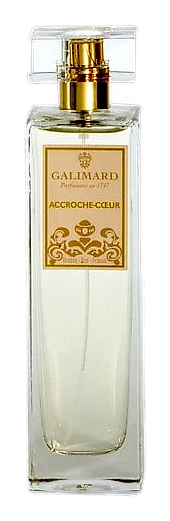
The accroche-coeur was a gesture: a lock of hair curled against the temple, pinned there as a declaration. Flirtatious. Deliberate. The kind of small, intentional beauty that says everything without saying it. Galimard named this fragrance for that moment, a nod to a century when subtlety was its own language, and a glance could do what a sentence couldn't. The house, rooted in Grasse since the mid-1700s, understands that a perfume can carry that same weight. Not loud. Not trying. Just present, and impossible to forget.
The structure is interesting: a bright, fruity opening that feels almost youthful, then a heart that turns the volume down and turns the warmth up. Cinnamon and orchid aren't typical partners, the spice wants to lead, but the orchid keeps it soft, almost powdery. That tension between sharp and gentle is where the fragrance lives. Patchouli in the heart isn't the patchouli of the 2010s either; here it's quieter, more dust than earth, doing the work of grounding without announcing itself. The drydown leans on tonka bean, which the brand highlights explicitly: bewitching vanilla is the payoff, but tonka is what makes it feel dimensional rather than flat.
The evolution
Apple and blackcurrant hit first, tart, bright, immediately present. The bergamot keeps things from getting too sweet. Then, within minutes, cinnamon enters the room. Not aggressive. More like the smell of a warm drink someone's nursing in a cold café. The fruity notes thin out as the orchid and rose take over, and suddenly the fragrance feels older, more composed. Rose isn't the star here, but it softens the cinnamon just enough. By hour two, vanilla and amber have arrived. The patchouli sits low, more texture than statement. This is where the fragrance lives longest, warm, slightly powdery, skin-close. On fabric, it holds into the next day: faint vanilla, the ghost of spice, a cardigan you don't want to wash.
Cultural impact
Accroche-Coeur arrived in 2012 as part of Galimard's effort to modernize its heritage from Grasse, France, founded in 1747. The fragrance emerged during a period when niche and artisan perfumery gained momentum, appealing to consumers seeking alternatives to mainstream luxury scents. Its fruity-spice combination resonated in post-recession markets where consumers valued distinctiveness and perceived craftsmanship over big fashion house names. Galimard's approach with this release reflected a broader trend among historic houses: balancing preservation of traditional French perfumery techniques with contemporary scent preferences that favored gourmand and oriental elements.