
The Story
Why it exists.
The beginning
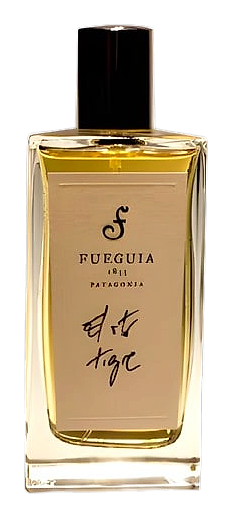
El Otro Tigre draws its name from Jorge Luis Borges, the Argentine writer who spent a lifetime collapsing geography into metaphor. The title riffs on his poem "El otro tigre," a meditation on tigers as idea and tigers as fact. One tiger imagined, one tiger real. Two creatures that can't be reconciled but refuse to leave each other alone. Julian Bedel, founder of Buenos Aires house Fueguia 1833, launched this composition in 2010 as part of a collection devoted to Borges. The olfactory translation stays close to the poem's bones: a musk accord and a tuberose, stripped of ornament, standing alone together. Few ingredients, one animal idea. The other tiger is the one you can't quite hold. There's something deliberate about the restraint.
What makes El Otro Tigre unusual is its refusal to decorate. The composition strips everything else back. The musk doesn't support the tuberose so much as let it speak for itself, and the ambrette in the middle bridges the animal and the floral without softening either. The result is a composition that reads as both intimate and untamed, closer to skin chemistry than to a bouquet. Bedel's approach fits Fueguia 1833's house philosophy: limited batches, natural ingredients, and a willingness to let a single note carry the entire weight of the composition.
The evolution
The first thirty minutes feel almost hermetic. Musk sits on skin like a second body heat, intimate, slightly fuzzy, with a creamy undertone that reads as almond skin or warm laundry fresh from the dryer. There's nothing floral yet. Just closeness. Then the tuberose arrives. Not a slap, more like a slow inhalation in a room where someone's been sitting for hours. It carries a green edge, almost indolic, the part of tuberose that smells less like a flower and more like living tissue. The musk doesn't retreat, it absorbs the flower, so the heart reads as one continuous breath rather than two separate notes. By hour four or five, the tuberose has quieted into something powdery and narcotic, and the musk returns to the foreground with more depth. A faint animal warmth persists, less sweet than it started, more grounded. The composition doesn't really change shape.
Cultural impact
El Otro Tigre occupies a specific niche: it's not a mainstream tuberose for someone who already loves white florals, and it's not a conceptual art object either. The Borges connection gives it cultural weight beyond the bottle, attracting readers and writers drawn to the poet's lifelong fascination with mirrors, tigers, and the impossibility of holding a single thing still. The fragrance becomes a kind of wearable homage, a small object that holds an entire literary lineage in its bones. What resonates most is how the perfume refuses to explain itself.