The Story
Why it exists.
The beginning
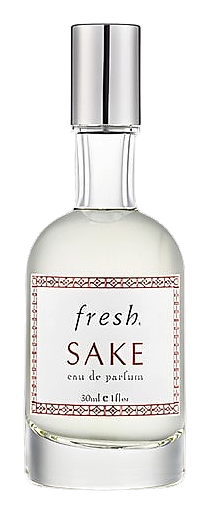
Fresh has always been interested in what happens before the perfume, the ritual, the clean canvas. Sake took that idea literally, reaching into Japanese bathing culture where rice water has softened skin for centuries. The brief wasn't about sake the drink. It was about sake's quieter truth: that starchy, slightly sweet, powdery quality that lingers after a long bath. Fresh was still young in 2005, three years past their first fragrance, learning how botanical honesty translated into something you could wear. Sake was the result of that inquiry. They worked with independent perfumers in Grasse and Paris, as was their practice, with a mandate for clarity and restraint. The goal was something that smelled like morning, not the morning you perform, but the morning you keep to yourself.
What makes Sake unusual is the rice powder note sitting at its center. In Western perfumery, powdery usually means iris or violet leaf, clean, abstract, impersonal. Sake's rice feels specific. It smells like the inside of a sake cup after you've drained it, or the fine starch dust on your fingers after handling short-grain rice. It's food and ritual at once. The combination of white peach and lily of the valley keeps the florals soft and watery rather than loud, more suggestion than statement. And the Indian sandalwood in the base isn't the creamy, buttery sandalwood of orientals. It's cooler, cleaner, almost pencil-shaving in its clarity.
The evolution
Sake opens with a quick spark, grapefruit and ginger give you maybe ten minutes of bright citrus energy. Then it softens. The florals don't burst; they drift. White peach and lotus arrive quietly, almost hesitantly, as if unsure they're allowed to be there. The real story is the drydown, and it takes its time getting there. Two hours in, the rice powder emerges. Not in the opening, where you'd expect it given the name, but in the base, after everything else has thinned out, the rice and musk and sandalwood settle into something that smells like warm skin and clean linen and the ghost of a steamy bathroom. It lasts close, intimate, for the remaining hours. On fabric it fades faster. On skin it becomes a second layer.
Cultural impact
Sake arrived in 2005 as a quiet counterpoint to the heavy, sillage-obsessed fragrances dominating that era. Where many Western fragrances of the time were designed to announce themselves, Sake was designed to stay close, to smell like skin, like a morning ritual, like the inside of a steamy bathroom where rice water still hangs in the air. The powdery rice-and-musk drydown was unusual for a mainstream Western release, and that intimacy gave it a devoted following among people who wanted fragrance to feel personal rather than performed. Since its discontinuation, it has become something of a quiet grail, the kind of scent people describe in forums as the one they wish they'd bought in bulk.