
The Story
Why it exists.
The beginning
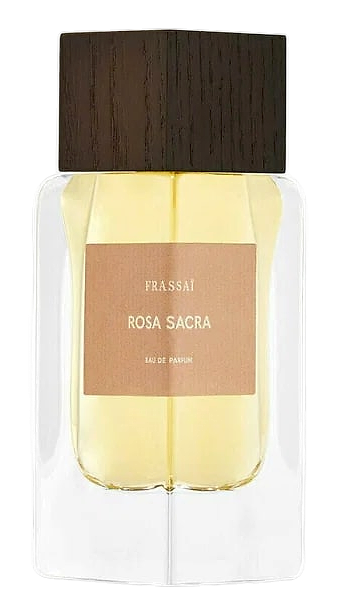
Rosa Sacra arrived in 2020 from Frassaï, perfumer Irina Burlakova, and the brief seems to be: what happens when you strip a rose of every cue that says "rose" and leave only the parts you can't name? Burlakova treats the composition less like a love letter to the flower and more like a field study, and the fragrance pyramid makes clear how seriously the structure has been considered. Top notes of blackcurrant, pink pepper, and black pepper do the work of disorienting you at the entrance. Heart notes of Turkish rose and palo santo negotiate rather than compete, each pulling the composition somewhere the other wouldn't reach alone. Base notes of vetiver, guaiac wood, and ambrette (musk) close the loop with materials that carry their own gravity.
The composition's quiet genius lives in the tension between Turkish rose and palo santo. The rose shares the stage with a wood traditionally burned in spiritual practice, and the two negotiate rather than dominate. The blackcurrant and black and pink pepper at the opening don't sweeten the deal. They rough it up, pushing the rose away from any confectionery associations and toward something more herbaceous, more alive. The palo santo that enters the heart carries a woodsy character that doesn't read as European church incense.
The evolution
The opening is almost confrontational. Blackcurrant hits sharp and green, almost like you've bitten into the fruit with the stem still attached. The pink and black pepper crackle underneath, and for a moment it doesn't smell like a rose at all. It smells like a hedgerow in late summer, somewhere between bramble and spice. Then the Turkish rose arrives, and it arrives sideways. Not a lush, baroque bloom, something greener, more transparent. The kind of rose you smell on a stem rather than in a vase. It carries through the next stretch of wear with remarkable steadiness, the pepper still flickering at the edges like a memory of the opening. The palo santo starts emerging later in the wear, and it's the surprise that earns the fragrance its name. It doesn't arrive as smoke. It arrives as a clean, almost milky woodiness that grounds the rose without burying it.
Cultural impact
Rosa Sacra has drawn attention from wearers who usually pass over rose fragrances. The composition's pairing of Turkish rose with palo santo, vetiver, and guaiac wood creates something distinct from the sweet, soliflore-style roses that dominate much of the rose category. Wearers describe it as a rose for people who don't usually reach for roses, a fragrance where the flower shares the stage with wood and pepper rather than taking the full spotlight. The published note list also anchors it in a specific materials tradition.