
The Story
Why it exists.
The beginning
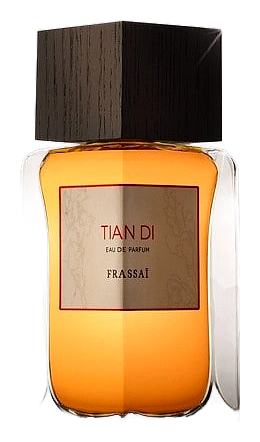
Tian Di draws from Chinese mythology, the peach of Xiwangmu on Mount Kunlun, a fruit that ripens once every three thousand years and grants immortality to those who taste it. Olivier Gillotin, working in 2017, translated that legend into scent: not a literal fruit bowl, but the idea of something rare and transformative. The fragrance is built around a tension between the immediate and the eternal, a fleeting peach note caught in a web of incense, resins, and woods that feel older than memory.
What makes Tian Di unusual is the peach itself. Most fragrances treat peach as a bright, jammy top note, sweet skin and stone fruit warmth. Here, it's smoked, almost charred, like the skin left behind after something has been consumed. That burnt quality plays against a dusty iris and chrysanthemum accord, adding a powdery dimension that keeps the composition from becoming purely oriental. The star anise and ginger in the opening aren't decorative, they create a cooling, slightly medicinal effect that makes the incense in the base feel contemplative rather than heavy. For a fragrance anchored in myth, Tian Di remains remarkably wearable.
The evolution
The opening hits with green galbanum and a flash of star anise, medicinal, bright, almost sharp. Within five minutes the ginger settles, and the peach emerges: not fresh, but smoked, like fruit left near an open flame. The chrysanthemum and iris arrive next, adding a dusty floral quality that feels like dried petals pressed between pages. By the second hour, the incense takes over, not church smoke, but Chinese incense, cleaner and more resins than burnt. The sandalwood arrives late, soft and creamy, wrapping around the tonkin musk to create a drydown that stays close to the skin for hours. On fabric, Tian Di lingers into the next day, that same burnt peach and incense accord, quieter but unmistakable.
Cultural impact
Tian Di occupies a specific niche within indie perfumery, the smoky-fruity oriental that resists easy categorization. Unlike the bright peaches of mainstream florals or the heavy ouds of the Middle Eastern market, it finds its audience among wearers seeking something contemplative and slightly strange. The combination of burnt peach skin and dusty iris creates a fragrance that reads as both ancient and modern, with enough originality to reward repeat wearing.