The Story
Why it exists.
The beginning
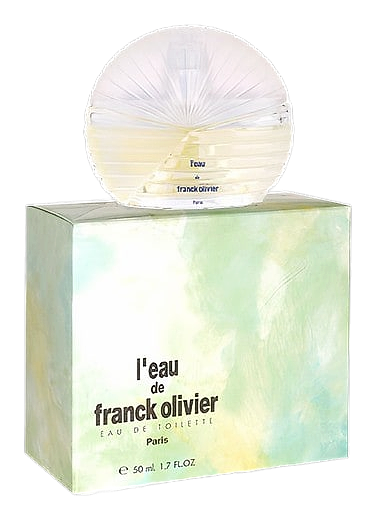
L'Eau de Franck Olivier arrived in 1998, a decade before the brand itself would formally establish itself in Dubai. Mark Buxton, a perfumer whose work has always leaned toward the structural, the unexpected, built this as a study in contrast: a fruity opening that doesn't behave like a fruity fragrance should. No sweetness as a safety net. No soft landing. Just tart, honest fruit that surrenders to something quieter before the wearer expects it.
The note architecture is unusual for its era. Floral fruity fragrances in the late 1990s typically sustained their fruit through the heart, a peach or berry that lingered alongside the jasmine and rose. Here, the fruit is a opening act, not a co-star. The violet and lily arrive fast, almost colliding with the raspberry's tail. That compressed transition is what makes the fragrance feel both accessible and slightly restless. On skin that runs warm, the heart and base arrive in half the time they'd take on someone else, and the whole arc reshapes itself around that heat.
The evolution
The opening arrives in under a minute: blackberry and raspberry pressing forward with a tartness that borders on sharp. No sweetness to soften the blow. The peach underneath adds body, not sweetness, more stone than fruit. Within ten minutes, the violet asserts itself. Powdery, slightly waxy, it sweeps the fruit aside like a curtain being drawn. The lily and rose hold the middle with quiet insistence, not loud florals, not shy either. What surprises is how fast everything converges toward the base. On most skin, the drydown begins at the 45-minute mark: sandalwood and vanilla arriving soft and warm, the musk lending a skin-like quality that doesn't animalic, just present. By hour three, it's close, intimate, the kind of sillage that only someone leaning in would catch. It lasts into the evening on warm skin, longer if applied to clothing. The vanilla has a way of outlasting everything else, arriving last and refusing to leave.
Cultural impact
L'Eau de Franck Olivier sits in an interesting corner of fragrance history: a 1998 floral fruity composition from a house that wouldn't formally exist for another six years. It's a relic of a moment when Western women's fragrances were still exploring the fruity territory that would explode in the early 2000s, but with an editorial restraint that most of its contemporaries lacked. The powdery violet heart places it closer to classic French florals than to the aggressively sweet fruity compositions that defined the era's commercial hits.