
The Story
Why it exists.
The beginning
Tornade D'Ete launched in France in 1980, when fragrance naming often carried a mood, season, or atmosphere without overexplaining it. The title points to a summer whirlwind, and the composition follows that restless brief. Bergamot and orange bring immediate brightness; hyacinth and green notes sharpen the opening. Then jasmine and tuberose unfold with a fuller floral pulse, while pine tree introduces an aromatic, woody edge. There are no verified perfumer credits, so the clearest account begins with the year, the French setting, and the scent itself.
What makes Tornade D'Ete interesting is the collision beneath its summery name. Citrus brightness sits beside green notes, then gives way to creamy jasmine and the more assertive tuberose. Pine tree interrupts the floral flow with a dry, aromatic texture. At the base, patchouli and musk lend weight while amber adds warmth. The result doesn't behave like a simple sun-and-breeze scent. It starts airy, turns lush and slightly heady, then gathers enough wood and warmth to feel composed rather than fleeting.
The evolution
The first impression is a bright lift of bergamot and orange, sharpened by hyacinth and green notes. As that opening settles, jasmine and tuberose bring a creamy, full-bodied floral phase, while pine tree keeps it from becoming too sweet or soft. The final drydown turns toward patchouli, musk, and amber. Patchouli supplies an earthy thread, musk softens the edges, and amber leaves a warm, ambered finish. Over a typical 4-6 hour wear, Tornade D'Ete moves from summer brightness to floral heat and then to a quietly woody trail.
Cultural impact
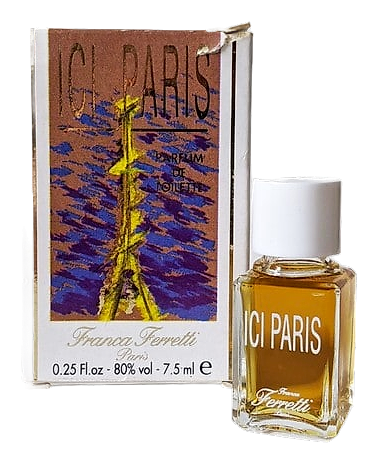
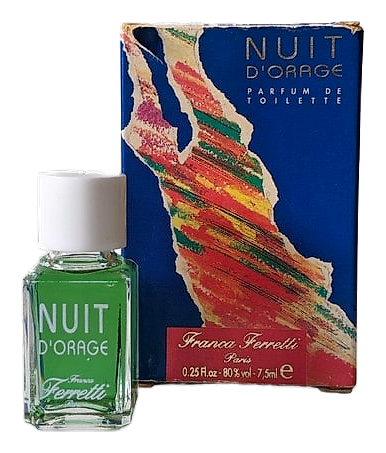
Tornade D'Ete sits within Franca Ferretti's accessible French fragrance wardrobe, where practical sensuality matters more than theatricality. Its 1980 launch date places it among the brand's late-century catalogue, alongside names built around clear ideas: freshness, floral character, place, and atmosphere. The fragrance's pull comes from that readable mood, a summer image paired with a composition that moves from citrus and green notes into tuberose, woods, and amber.