
The Story
Why it exists.
The beginning
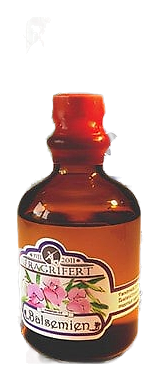
Balsemien is attributed to Francesco van Eerd, though the available sources conflict on its release year: one lists 1900, while another leaves the date unknown. The name evokes balsam and the scented plant world around it, while the fragrance itself moves through a polished floral register built around aldehydes, Neroli, Rose, Jasmine, Impatiens, Musk, and Balsam Fir. Its appeal lies in the tension between a formal, composed opening and a softer floral heart. Aldehydes introduce a cool, reflective sheen. Neroli and Impatiens bring air and greenery into that polished space, and Rose and Jasmine unfold with the brightness of flowers opening inside a sunlit room. Musk rounds the composition into a smooth, powder-soft finish, while Balsam Fir adds a quiet evergreen accent beneath the florals.
The unusual part is how many kinds of freshness Balsemien holds at once. Aldehydes bring a cool, polished gleam. Impatiens adds green, watery energy, while Neroli gives the composition a transparent floral lift. Rose and Jasmine make the middle more opulent, but Musk keeps the result soapy rather than heavy. Balsam Fir introduces a resinous, evergreen edge that stops this from becoming a simple bouquet. Together, the notes create a floral landscape with clean lines, soft powder, and a faint natural sharpness.
The evolution
The opening feels immediate and immaculate, with aldehydes laying down a cool, reflective sheen. Neroli and Impatiens bring air and greenery into that polished space, while Rose and Jasmine begin to unfold like flowers opening inside a bright room. The composition then settles without losing its freshness. Musk softens the floral heart into a smooth, almost powdery texture, and Balsam Fir adds a quiet evergreen trace beneath it. That final note is the surprise, because it makes the scent less decorative and more grounded. As Balsemien develops, the aldehydic brightness gives way to a clearer floral character. Neroli retains its transparent citrus edge, while Rose and Jasmine take on greater weight as the middle notes establish themselves. Impatiens lends the arrangement a leafy freshness that keeps the florals from becoming overly sweet.
Cultural impact
Balsemien offers a distinctive entry into the world of classic floral perfumery. Its name links balsam with the broader scented plant world, while its composition balances aldehydes, Neroli, Rose, Jasmine, Impatiens, Musk, and Balsam Fir in a polished floral arrangement. The contrast between reflective freshness, green foliage, rounded petals, powder-soft musk, and evergreen gives the fragrance a character that rewards close attention.
The House
Fragrifert ParfumeurFragrifert Parfumeur is a Wellington perfume house and small perfumery devoted to recreating fragrances associated with the Victorian era. Founded by Francesco van Eerd, the brand presents itself as a working museum of scent, pairing historic-style compositions with a contemporary boutique. Its catalogue spans floral, seasonal and archival fragrances, including Gardenia, Muguet, Cyclamen, Printemps, Automne, Ete and Hiver Perfume, as well as Balsemien and Ajonc, both dated 1900 in the brand records. The central attraction is the idea that perfume can be experienced as a historical artefact, interpreted through smell rather than through a conventional retail display.
The Creator
Francesco van EerdVan Eerd's style favors the evocative language of Victorian fragrance, with compositions that appear textured, enveloping and strongly imagined. His work through Fragrifert Parfumeur suggests an interest in period character, natural ingredients and carefully judged presentatio…