




Heritage
A house, in its own words
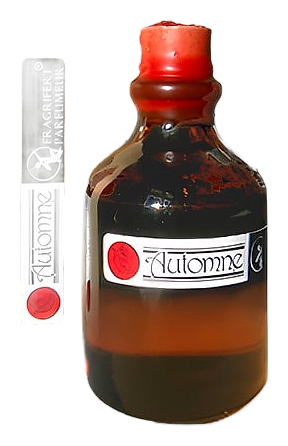
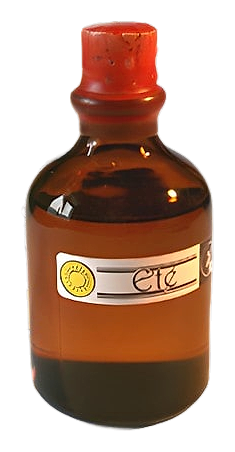
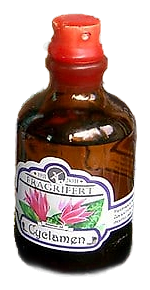
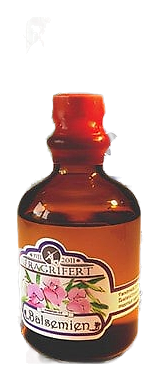
Fragrifert Parfumeur traces its identity to Gustave Fragrifert, a French perfumer who lived from 1880 to 1911 and reportedly never brought his perfumes to market. That unrealised body of work became the starting point for the Wellington perfumery created by Francesco van Eerd. The project began in 2011 with van Eerd and performing arts student Robbie van Eerd, according to a local feature on the business. Fragrifert Parfumeur later developed the idea of The Victorian Perfumery, a mini-museum and perfume emporium where the fragrances are presented alongside the story of their creation. The name Fragrifert comes from Gustave, while the house’s broader historical frame draws on nineteenth-century French perfumery. This is not a direct corporate succession from an established Victorian fragrance house. It is a modern interpretation built around the figure of a perfumer whose work remained largely outside the market. The catalogue reinforces that lineage through names and dates associated with the turn of the twentieth century. Balsemien and Ajonc are listed as 1900 creations, Gardenia and Cyclamen also carry the 1900 date, and Muguet appears as a 1901 fragrance. Seasonal entries such as Printemps and Ete, both dated 1898, and Automne and Hiver Perfume, both dated 1897, extend the sense of an imagined historical fragrance wardrobe. The result is a perfumery with an archival character, rooted in a founder’s story and expressed through compositions that engage with the textures of fin-de-siècle fragrance culture. Fragrifert Parfumeur treats perfume as a way of entering history rather than simply wearing an accessory. Its creative premise is the Victorian perfumery, where individual fragrances could act as coded invitations, evoking a season, a flower, an hour or an atmosphere. The historical names in the range show a deliberate interest in evocation and narrative. Gardenia and Muguet are recognisable floral signals, while Printemps, Automne, Ete and Hiver Perfume structure the collection around the turning year. The house’s museum concept reinforces this approach by placing the act of smelling inside a broader story of manufacture and material culture. In Wellington, the perfumery functions as both boutique and exhibition, inviting visitors to encounter fragrance as an artefact made in a particular time and manner. Its presentation avoids the anonymity of mass-market scent categories. Each perfume carries a name, a year and an implied setting, giving the collection the character of a cabinet of olfactory documents. The philosophy is therefore interpretive as much as decorative. Historic perfume formulas and styles are used to create a coherent world for contemporary discovery, one in which fragrance is linked to people, seasons and memory. What matters is not only how a perfume smells, but the history it makes accessible.