The Story
Why it exists.
The beginning
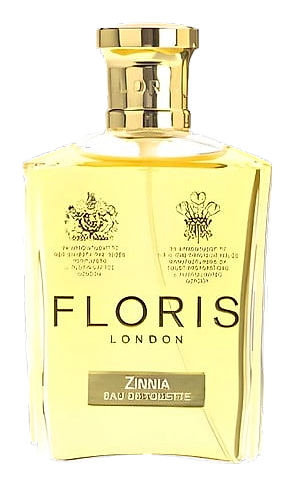
Douglas Cope revived Zinnia in 1990, reconstructing a formula the house attributed to Juan Famenias Floris around 1765. That's nearly two and a half centuries of scent history in one bottle. The original Zinnia had appeared in the Floris catalogue in 1860, then faded from the line over the following decades. Cope's task was not merely reformulation, it was resurrection. He worked from that historical formula, aware that the original materials, suppliers, and extraction methods had shifted across generations. Rather than chasing some impossible authenticity, he built something that honored the spirit of the original using what 1990 had to offer. The result captures a specific kind of British refinement: restrained, assured, uninterested in announcing itself.
What makes Zinnia interesting is its structural tension. The opening is green and almost medicinal, galbanum's bitter cut, violet leaf's dewiness, but the heart dissolves into something powdery and warm. That transition from cool to soft is unusual. Most florals commit to one register. Zinnia refuses. The lily of the valley at its center is the star: fresh, small, almost shy. But it's framed by orris root's powdery dust and carnation's subtle clove warmth, which gives the florality some backbone. The heliotrope in the base reinforces that almond-soft finish. It's a composition that rewards patience, you don't smell the whole thing in the first spray.
The evolution
The opening announces itself with green authority. Galbanum's bitterness hits first, sharp enough to read as almost medicinal. Violet leaf follows, adding a dewy, vegetable freshness. Ylang-ylang is present but restrained, it provides a faint tropical sweetness that prevents the green from becoming harsh. Within an hour, the galbanum recedes and the florals take over. Lily of the valley leads: delicate, sweet, slightly soapy in the best way. Orris root adds its powdery quality. Rose softens everything. Carnation, barely perceptible, introduces a hint of clove spice that keeps the heart from becoming merely sweet. By the second hour, the composition begins its slow slide toward warmth. Heliotrope emerges, lending an almond-soft quality. Vanilla and sandalwood create a creamy, warm base. Musk keeps everything close to the skin. The sillage moderates noticeably, you become the only person who notices the drydown. Six to eight hours later, a faint trace of sandalwood and vanilla remains. Close enough to be intimate. Gone before anyone asks what you're wearing.
Cultural impact
Zinnia first appeared in the Floris catalogue in 1860, disappeared, then returned in 1990 before being discontinued again. Its cult status among those who remember it stems from that rare combination: powdery elegance without heaviness, green freshness without sharpness, warmth without sweetness. The fragrance occupies an unusual middle ground, formal enough for evening, soft enough for daily wear. Its fans describe it as the scent of someone who doesn't need the room to know they've arrived.