The Story
Why it exists.
The beginning
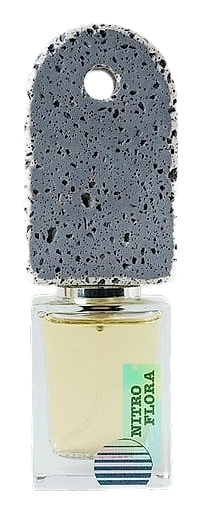
Nitroflora is framed as a dispute between instinct and reasoning, an attraction to randomness rather than a neat plan. Its floral notes never appear politely. They push against cumin, warm spices, powder, and an animalic musk that stays close and faintly unsettled. The floral character is present but deliberately complicated, moving between soft impressions and sharper edges rather than settling into a conventional bouquet. Powder gives the composition a muted, tactile quality, while the musk lends a sense of intimacy and unease. It's a portrait of floral desire with the manners stripped away.
What makes Nitroflora unusual is the friction inside it. Floral notes and animalic musk could easily sweeten each other, but cumin and warm spices keep the combination from turning pretty. Heliotrope and heliotropin bring an almond, powdery haze that softens the edges without removing them. Together, they create a scent that sits somewhere between skin and atmosphere: intimate at first, yet unsettled enough to keep revealing new facets.
The evolution
The fragrance presents a layered progression, beginning with an impression of dusty heat as cumin and warm spice sharpen the composition. A floral core then moves through the middle, diffuse enough to feel like memory rather than bouquet, while powder settles over it with a soft, talc-like texture. The animalic musk remains close to skin, a little unstable, pulling the other notes slightly underground. Cumin gradually becomes less distinct as its heat folds into the musk, while the powder stays suspended above them. Over time, the composition grows less obviously floral and more textured, with smoky, musky, and quietly persistent elements taking prominence. Powder remains especially present, faintly dusty and faintly sweet, with the musk sitting underneath like warmth trapped in fabric. The overall effect is lingering and intimate, continuing long after the spice has cooled.
Cultural impact
Nitroflora occupies an expressive space within contemporary fragrance, treating scent as atmosphere rather than a simple accessory. Its floral notes are complicated by cumin, warm spices, powder, and animalic musk, creating a composition that can feel intimate, tactile, and slightly destabilising. Rather than relying on polished prettiness, it invites attention through contrast, revealing a different side of the floral idea as the different notes interact and shift.
The House
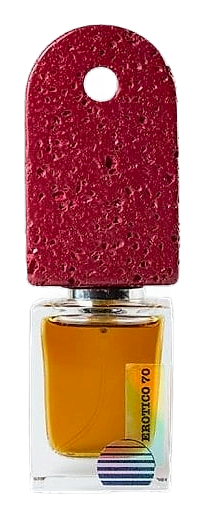
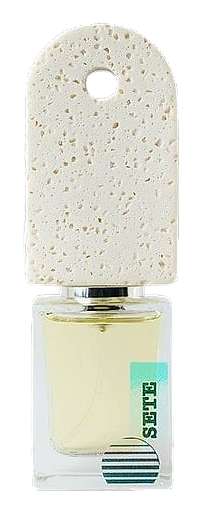
FloramaraFloramara is an Italian niche fragrance house that made its debut in 2025. The name arrives with an immediate romantic charge, blending flora with the warmth of a late evening, a suggestion that carries through the brand's emerging catalogue. Releases known so far include Nitroflora, Sete, and Erotico 70, the last two carrying 2026 dates that place them near the edge of the brand's short public history. Little has been disclosed about the perfumers behind these compositions. Floramara still has the profile of a young house finding its voice, with limited third-party coverage and a small, developing range. That early stage makes each new release part of the story rather than a chapter in an already established legacy. For discovery-minded collectors, Floramara offers something still being defined: a recent Italian label with distinct names, an ambitious first year, and a point of view that appears to sit between natural imagery and the more expressive end of niche perfumery.
The Creator
Giuliana Acquaro & Andrea NamoiniThe available record gives a concise picture of Acquaro’s technique. Her compositions for Floramara favor clarity over complexity for its own sake, with materials chosen to create definition and wearability.