
The Story
Why it exists.
The beginning
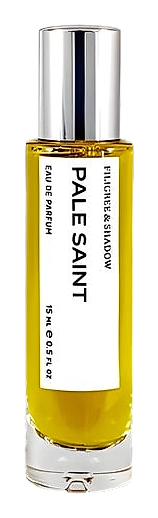
Pale Saint arrived in 2015 as part of the first public release from Filigree & Shadow. James Elliott had spent two years studying perfumery privately before launching the house that April, and Pale Saint was among six fragrances that defined the studio's debut. The name carries an obvious tension. Saints are unambiguous. Pale Saints are not. Elliott was interested in the person who appears good, who performs goodness, but who carries something else entirely underneath. The fragrance mirrors that idea. Bergamot and orange blossom arrive clean, almost innocent. But black pepper waits immediately beneath the surface, as does the warmth of carnation. The florals are not the whole story. They are the cover.
What makes Pale Saint structurally interesting is how the florals function in the base rather than the heart. Ylang-ylang and tuberose typically anchor compositions at the middle stage, lending sweetness and warmth there. Elliott places them lower, where they complicate the leather, tobacco, and vetiver instead of introducing the fragrance's main event. The result is a drydown that contradicts itself: warm florals meeting dark woods and animalic leather, sweetness arguing with earthiness rather than reinforcing it. This is an unusual architecture. Most fragrances build toward sweetness. Pale Saint builds away from it, then lets it arrive unexpectedly late, as if reconsidering.
The evolution
The opening lasts roughly 30 minutes of genuine brightness. Bergamot keeps it crisp, orange blossom keeps it soft, and there is an undercurrent of black pepper and carnation that arrives almost immediately, adding warmth beneath the citrus that prevents the top from reading as innocent or one-dimensional. Then the florals shift. Orris brings powdery texture. Red wine deepens everything toward something fermented and warm. The heart lasts two to three hours. The base is where Pale Saint earns its name. Palo Santo and musk hold the opening through the middle, but leather and tobacco take over as the dominant presence. Vetiver adds earth and quiet smoke. Ylang-ylang and tuberose arrive late, adding a sweetness that feels earned rather than obvious. The drydown lasts for hours. It stays close to the skin, intimate and persistent, and it lingers on fabric into the next day.
Cultural impact
Pale Saint appeared in 2015 alongside six other fragrances from Filigree & Shadow's debut collection, each one constructed around a specific tension between surface and substance. The house has maintained a deliberately small profile since then, building a following through quiet word of mouth rather than aggressive distribution. Within niche perfumery, the brand occupies a specific position: handcraft and small-batch without the theatrical excess that sometimes accompanies that positioning. The fragrances do not shout. They reward attention. This is unusual enough that Pale Saint stands out not because of what it contains but because of how it behaves.