The Story
Why it exists.
The beginning
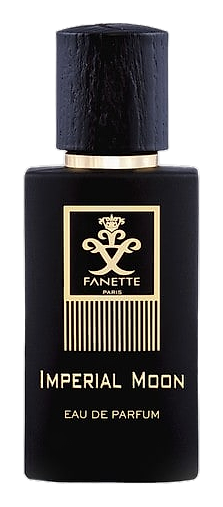
Imperial Moon debuted in 2016 as part of Fanette's launch collection, landing firmly on the oriental end of the fragrance spectrum. The name sets the scene: something regal, something nocturnal, something that belongs to a court rather than a casual afternoon. There's an imperial gravity to the composition that feels intentional from the first spray, a sense that the perfumer wanted to compose something with presence. Imperial Moon reads like a scent built for a throne room, then reimagined for a modern wearer who wants authority without ceremony. The opening carries that crisp, almost mineral brightness that catches you off guard, a cool shimmer that feels more like cold moonlight than conventional citrus or floral top notes.
The composition leans on a deliberate friction. Aldehydes, those sharp and almost metallic molecules that add a frozen sparkle, are stacked against saffron, a warm and slightly bitter spice with real presence. That tension between icy sparkle and warm spice is the spine of the fragrance. Then the base delivers oud, agarwood's resinous heart, layered with amber for radiance. The combination reads as regal and slow-burning, the kind of scent that announces itself without ever raising its voice.
The evolution
The first ten minutes are almost disorienting. Aldehydes lift the composition into something cold and effervescent, a metallic brightness that feels more like moonlight on stone than anything organic. Then saffron arrives, deep and almost leathery, and the temperature shifts. Ginger adds a clean burn beneath the saffron's velvet. Within thirty minutes the woods take over. Sandalwood and patchouli build a dense, earthy middle that feels grounded, rooted, serious. The oud emerges somewhere around the ninety-minute mark, and it doesn't sneak in. It commands. The agarwood gives Imperial Moon its center of gravity, resinous and slightly animalic, holding the composition together through the afternoon and into evening. By hour five, what remains is a close-to-skin warmth, amber glowing through the last traces of oud, like embers after the fire has stopped being a spectacle. On fabric, the saffron-oud signature can persist well into the next day.
Cultural impact
Imperial Moon makes a strong case for oud as a central player rather than a supporting accent. It builds its entire architecture around resinous wood rather than treating it as an exotic footnote to a more conventional composition. The result reads as cold at the top and warmer at the base, a combination that gives the scent a versatile temperature range depending on how it interacts with a particular wearer's skin.