
The Story
Why it exists.
The beginning
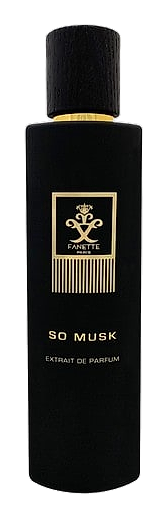
So Musk arrived in 2019 as Fanette's answer to a simple question: what happens when you strip everything back and let musk do the talking? The brand's French elegance, drawn from a lineage traced back to Fanette herself, the first recorded female perfumer, serving Babylonian royalty, runs through everything. But So Musk doesn't shout about heritage. It whispers. The name says it all: direct, unapologetic, a statement made in two words.
What makes So Musk interesting is the restraint. Where many musk fragrances pile on complexity to justify their presence, this one builds outward from a single idea: white musk as a canvas, softened by cotton flower and warmed by amber. The spice in the top is barely there, a suggestion, not a declaration. The real work happens in the heart, where the musk and cotton flower create something that reads as clean but feels as intimate as skin. It's not trying to be complicated. It's trying to be true.
The evolution
The amber arrives first, soft and golden, barely a whisper of warmth that hints at something underneath. Thirty minutes in, the white musk takes over. This is the phase that defines the fragrance: a clean, powdery warmth that doesn't project far but clings. Cotton flower adds an airy quality, like fabric just pulled from the line. The drydown is where it gets personal. The musk settles into skin, becoming something that only someone standing close will notice. Six to eight hours of that quiet presence. On fabric, it lingers until the next wash.
Cultural impact
Musk-forward fragrances have cycled through trends, from the heavy animalics of the 1980s to the clean musks of the 2000s. So Musk fits into a more recent moment: the turn toward skin scents, intimate fragrances that don't announce themselves. It's for someone who wants to smell like themselves, only better.