
The Story
Why it exists.
The beginning
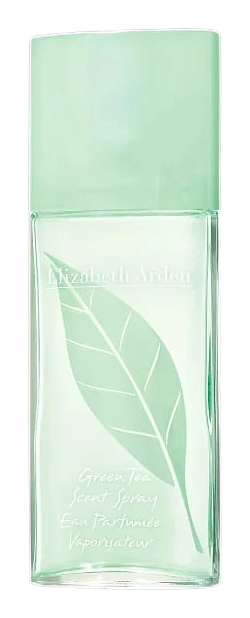
Elizabeth Arden's Green Tea landed in 1999, and it marked something of a departure for a house more associated with fuller, red-lipsticked glamour. The fragrance was composed by Francis Kurkdjian, a French perfumer whose name would soon become synonymous with the clean, transparent style that defined much of the early 2000s in perfumery. Kurkdjian was given the challenge of translating the idea of green tea into a wearable composition, and the result was something that had very little precedent on the market. Green tea as a central note was unusual for a fine fragrance, more commonly associated with candles, soaps, or iced beverages.
What makes the composition work is its restraint. Green tea in perfumery is a fragile note, often slipping into something dusty or stale if it isn't handled carefully. Kurkdjian's structure keeps it suspended in motion, never settling into anything flat or stagnant. The lemon and bergamot at the top register as a sharp, almost sparkling brightness, the kind of citrus that announces itself clearly without dominating. The celery seed alongside the green tea adds a vegetal snap, a slightly raw, green crunch that keeps the composition feeling fresh and alive rather than steeped or tired.
The evolution
The opening is the boldest the fragrance ever gets. Lemon and bergamot arrive first, sharp and almost effervescent, a burst of citrus that feels cold against the skin. Within moments the green tea begins to surface, cooling the brightness into something quieter and more herbaceous. The celery seed weaves through the middle phase, adding a faint green snap that keeps the scent from veering into sweetness. The jasmine, barely perceptible, drifts in as a soft warmth rather than a floral statement, more an undertone than a presence. As the hours pass, the citrus fades entirely and the green tea recedes into a gentle hush. What remains is the base, musk and amber and oakmoss, settling close to the skin in a warm, slightly woody haze. The drydown is intimate rather than projecting.
Cultural impact
Green Tea has held its place on shelves for over two decades, a rare feat in a category where launches cycle quickly and older scents often fade into obscurity. Its staying power says something about what it offers: a clean, uncomplicated profile that reads as fresh in any season and works across a wide range of settings. The fragrance didn't just fill a gap in the market, it helped define a category of light, transparent scents aimed at anyone who wanted something easy to wear.