

The Story
Why it exists.
The beginning
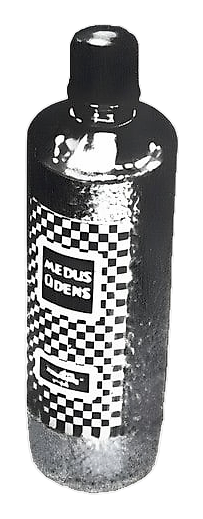
Medus ūdens launched in 1969 from Dzintars, the Latvian perfume house. The name translates to "honey water," and the composition lives up to that simplicity: honey, marigold, woody notes, three ingredients arranged like a still life. Nothing extra, no supporting cast, just these three materials doing all the work. The era shaped its character, but what endures is the directness of the idea. Honey is the sweet backbone, golden and unmistakable. Marigold adds an herbal, slightly bitter facet that keeps the sweetness from collapsing into something sticky. The woods ground everything, providing a warm, dry landing strip for the sweetness to settle onto. There's an honesty to it, a refusal to dress up three notes as something more elaborate.
What makes this composition interesting is its restraint. Three notes, that's the whole pyramid. No citrus sparkle, no green opening, no modern synthetics doing acrobatics. Honey carries the entire weight, with marigold adding an herbal, slightly bitter facet that keeps the sweetness from collapsing into cloying, and a woody base that gives it somewhere to land. The structure feels deliberate and spare, a floral built from very few ingredients but with each one earning its place. The honey is the body, the marigold is the counterweight, and the woods are the anchor.
The evolution
The opening is where the honey arrives at full volume, golden, syrupy, almost edible. Marigold hums underneath, herbal and slightly sharp, lending a green edge that cuts through the sweetness. The first fifteen minutes are the loudest this fragrance ever gets, a warm, dense sweetness that sits close to the skin. After that, the woody notes begin their slow takeover. The sweetness thins, the marigold recedes into something more bitter and green, and the woods take over. By the two-hour mark, the honey has been reduced to a golden hum, the marigold is a memory, and the woods are doing most of the work. The drydown is a quiet, warm, slightly sweet wood that lingers on clothes and skin for hours. On fabric the next morning, it's still there, faded to a golden ghost.
Cultural impact
Medus ūdens holds a particular place among honey-themed fragrances, a composition that commits fully to its central material rather than using honey as a background accent. Within Dzintars' catalog, it stands out for its warmth and its narrow focus, a scent that doesn't try to be everything at once. Among collectors who appreciate spare, classical structures, it has earned a quiet following. The fragrance shares a profile with Sandal Ale by Ayala Moriel, a modern indie composition that echoes this honey-woody-sweet direction with its own blend of warmth and wood.