
The Story
Why it exists.
The beginning
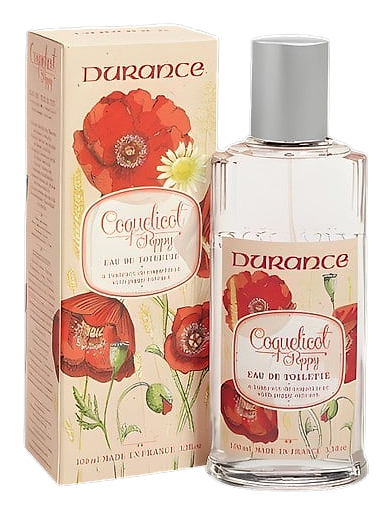
The coquelicot, the red poppy, is one of Provence's most recognizable wildflowers. It dots the roadsides and vineyard rows each spring, turning landscapes into Impressionist paintings overnight. At the foot of the Château de Grignan, where Durance en Provence was born among truffle oaks and lavender fields, these poppies are practically a landmark. The house wanted to bottle that brief, astonishing moment, when the hillsides go scarlet for a few weeks before the heat takes them. Coquelicot became their attempt to capture that window: fleeting, vivid, impossible to ignore.
The challenge with poppy as a perfume note is that it's not an obvious floral. It lacks the drama of rose or the creaminess of jasmine. What it offers is something greener, slightly peppery, and undeniably fresh. Durance en Provence chose to let that unusual quality lead rather than bury it under sweeter florals. The result is a fragrance that feels more like walking through a field than wearing a constructed perfume, which is exactly the point. It's Provençal without being postcard-sweet, floral without being girlish, grounded without being heavy.
The evolution
The opening arrives bright and tart, mandarin and red currant hitting first, followed quickly by peach's softness. For the first twenty minutes, it's almost likeable in a safe way. Then the poppy enters. That's the turn. It arrives green and slightly medicinal, cutting through the fruit like a breeze through tall grass. The jasmine, rose, and violet don't announce themselves so much as hold the poppy up, giving it structure. By hour two, the composition has settled into something powdery and warm, musk close to the skin, ylang-ylang adding a faint tropical sweetness that nobody saw coming. The drydown stays intimate. Moderate sillage means this one doesn't announce itself, it waits for you to lean in. Longevity holds for a full afternoon on most skin types before fading quietly, leaving just the warmth of skin.
Cultural impact
The poppy holds deep significance in Provençal culture, appearing in traditional textiles, local festivals, and artistic representations of the region's landscape. Durance en Provence, rooted in Grasse's perfume heritage, draws on this botanical symbolism to create fragrances that connect wearers to the natural rhythms of southern France. Coquelicot joins a lineage of floral fragrances that celebrate the ephemeral beauty of wildflowers rather than cultivated blooms, challenging conventions that favor roses or jasmine in perfumery.