The Story
Why it exists.
The beginning
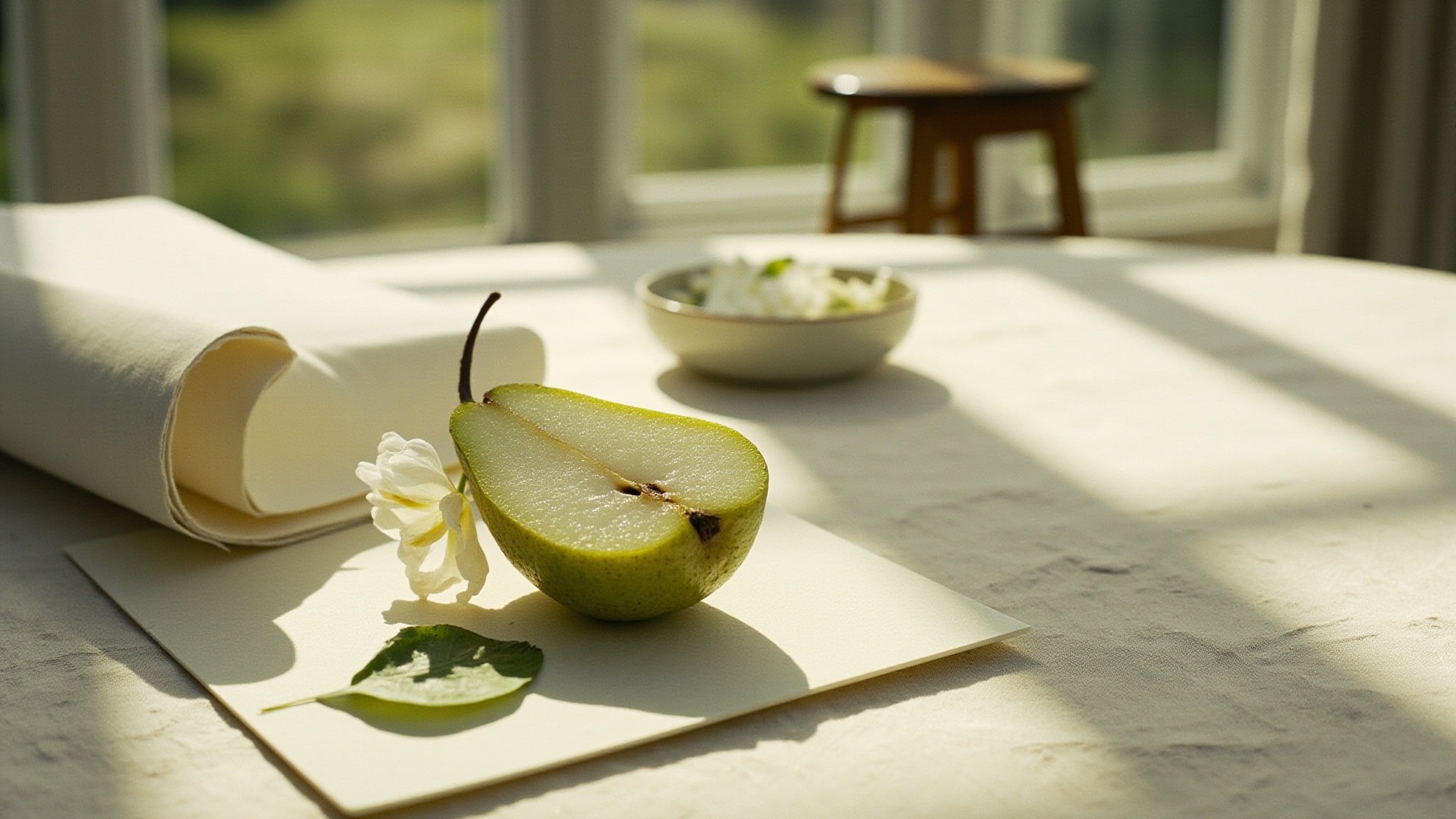
d'Anjou takes its name from a pear variety, not a royal house. The d'Anjou pear carries a characteristic egg shape, dark green skin, and sweet, slightly spiced flesh. Dawn Spencer Hurwitz translated that fruit into a composition she describes as soft enough to wear anytime, with anything. This is a spring sketch: a study in green pear, tender white petals, and a clean musk finish. Hurwitz introduced d'Anjou through DSH Perfumes, where she composes botanical-driven fragrances in a distinctly personal register. The fragrance reads as an exercise in restraint, a deliberate holding back from the richer, more opulent florals in the DSH catalog.
What makes d'Anjou interesting is what it leaves out. The Bulgarian rose absolute is the only heavyweight in the formula. Everything else, green pear, petitgrain, lily of the valley, cyclamen, musk, lives in the lighter register. The Bulgarian rose, with its density and honeyed depth, sits oddly against this airy backdrop. Rather than anchoring the composition, it drifts. The petitgrain introduces a bitter-green edge that keeps the opening from reading as simple fruit. The cyclamen adds a watery, almost aquatic quality that some wearers detect and others don't.
The evolution
The opening is sharp and immediate: green pear juice, the bitter-snap of petitgrain leaf, something almost like snapping a stem between your fingers. It reads as a cold, crunchy bite of fruit. Ten to fifteen minutes in, the pear softens. Lily of the valley arrives with that cool, green sweetness, and the Bulgarian rose absolute surfaces beneath it. The heart phase is where the composition surprises. The rose is present but not dominant, more suggestion than statement. Cyclamen adds a translucent quality, almost watery. By the thirty-minute mark, the florals have thinned considerably. The musk base emerges quietly, skin-close and clean. There is no dramatic drydown here, no resinous anchor or heavy base note asserting itself. What stays is a faint musk, a trace of the rose, and a memory of pear.
Cultural impact
Wearers describe d'Anjou as the scent of clean laundry, of a white shirt, of spring mornings. The pear note is uncommon enough to register as individual, familiar enough not to intimidate. For those drawn to DSH's catalog, d'Anjou represents a lighter composition, a quieter offering that asks little of the wearer. It is, in its way, a study in what perfume can be when it stops trying. The fragrance has earned a following among those who prefer their scents understated, who want something present but not assertive. Its transient quality becomes part of its charm; you catch it in passing rather than wear it as a statement.