
The Story
Why it exists.
The beginning
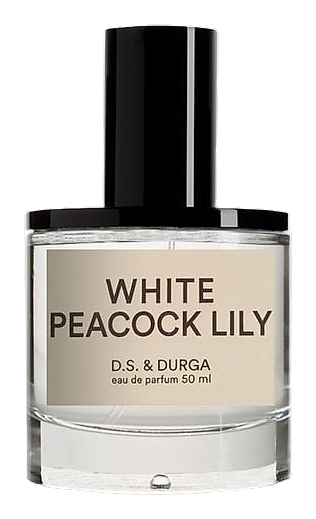
White Peacock Lily arrives from a scene: a lone peacock floating over cream lilies, oleander, and a sea of alabaster violet, orchestral pads of harps and horns droning, pale blue fog hanging in far woodlands. It is less a perfume brief than a mood painting. The name says exactly what it means, theatrical, white, and a little alien in its beauty. That Moltz pulls it off is a testament to his nose for the incongruous. The fragrance opens with a cool rush of lily and oleander, the green stems slightly bitter, the petals creamy and remote. As it settles, the violet accord lifts, adding a powdery, almost waxy depth that rounds the floral edges. The fog note, aquatic and mineral, keeps everything suspended, neither fading nor projecting aggressively.
The note structure here is unusual precisely because it resists the usual cream-floral pairing. White lily and Egyptian jasmine, yes, but whipped cream and violet powder pull the florals toward something edible, almost textile. Nerium oleander and the mist accord keep pulling back toward cool, green, slightly bitter water. Cabreuva wood introduces a dry, faintly aromatic wood that stops the cream from becoming saccharine. Ambrette seed in the base, musk mallow, is what gives the drydown its skin-like warmth rather than a heavy vanilla wall. The tension between edible cream and aquatic-green bitterness is not a flaw. It is the entire point.
The evolution
The opening is cool and dewy. Grapefruit and oleander arrive together, the citrus bright and the green note slightly bitter, almost medicinal. Mist accord hangs beneath everything, like moisture on a greenhouse glass. This phase reads clean and a little remote. Not cold. Just not warm either. Within the first hour, the lilies arrive. They do not storm the stage. White lily and Egyptian jasmine bloom slowly through the mist, and the whipped cream note begins to soften their edges. Violet powder rises. The scent shifts from watery-green to creamy-floral almost imperceptibly, by the time you notice, the grapefruit has receded and the mist has thinned. The heart of White Peacock Lily is where it earns its name. The drydown settles into warmth. Ambrette seed and vanilla wrap around the remaining lilies, the violet powder eventually softening into skin. This is where the fragrance becomes intimate rather than atmospheric. The sillage drops from moderate to close.
Cultural impact
White Peacock Lily occupies a distinct space in the D.S. & Durga catalog, translating visual and emotional moments into scent. The composition has always been divisive: the oleander note and mist accord produce a cool, slightly alien floral that polarizes. Some wearers find it remarkable. Others find it remote. The fragrance opens with a crisp, green lily note that quickly gives way to the cooler oleander, which adds a slight medicinal edge to the sweetness. Violet deepens the heart, lending a powdery softness that keeps the florals from feeling too heavy. As the scent develops, the mist accord emerges, briny, aquatic, and quietly persistent.
The House
DS&DurgaD.S. & Durga is a Brooklyn-based fragrance house founded in 2007 by husband-and-wife team David Seth Moltz and Kavi Ahuja Moltz. David Seth Moltz, a self-taught perfumer and former indie musician, composes all the house scents while Kavi handles visual design. The brand creates immersive fragrances inspired by specific feelings, places, and cultural moments, ranging from the American West (J. Crew Homesteader's Cologne, 2013) to historical periods (Beverly Hills 1985, 2010) and abstract emotional states (You Kill Me With Silence, 2018). D.S. & Durga is notably a perfumer-owned house, giving the founder creative control across the entire brand. Their catalog spans chypres, colognes, and aromatic compositions, with later releases including Royal Purpure and King Majesty Bergamot Chypre (2024). The brand operates from Brooklyn, New York, and has developed a following among fragrance enthusiasts drawn to its narrative-driven approach.
The Creator
David Seth MoltzSelf-taught and deliberately unconstrained by classical training, Moltz favors an unconventional palette that includes unconventional materials alongside traditional ones. His fragrances tend toward the narrative and atmospheric, often featuring sharp contrasts: sweet against…