The Story
Why it exists.
The beginning
Hindi Tabac emerged from Dixit & Zak's ongoing conversation between Zakir Laskar's expertise in traditional Indian scents and Nitish Dixit's background as a trained chemist. The 2022 release takes its name from the Indian attar that fragrances chewing tobacco, a material rooted in South Asian sensory culture. Rather than treating it as a polite accent note, they built around tobacco as a structural element, layering it against Bulgarian rose, henna, and a base of Indian oud. The result is a fragrance that wears its references without apology, letting each element speak with full presence rather than suggesting distant cultural memory.
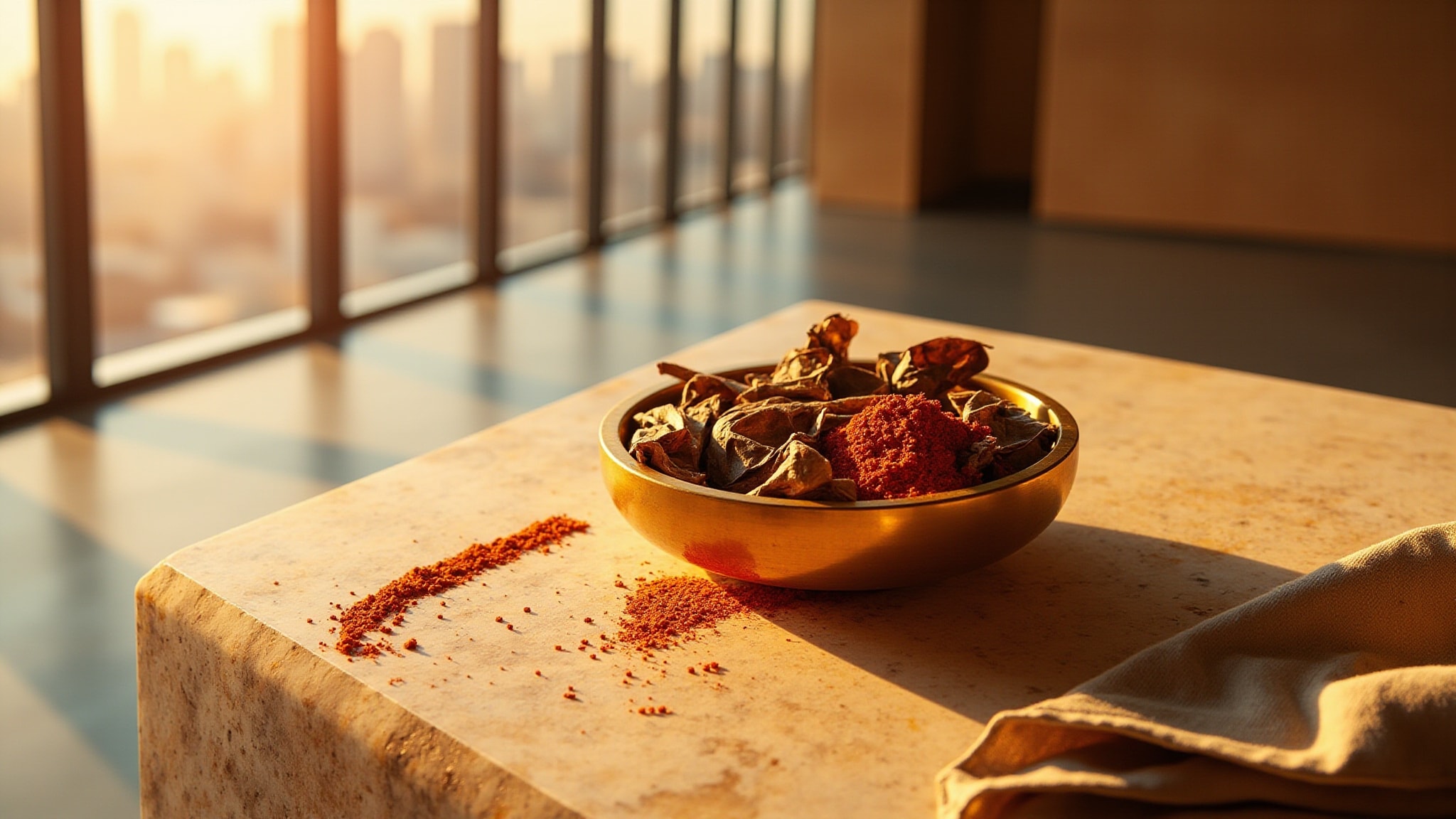
What makes Hindi Tabac unusual isn't any single material, it's the orchestration of four classical Indian pillars: oud, sandalwood, rose, and animalics. Saffron appears in the base, not the opening, which is rare. Mitti attar, distilled from sun-baked earth, gives the drydown a terric quality. The henna in the heart reads as a dusty, slightly bitter warmth rather than anything floral, adding an unexpected dimension to the rose that precedes it.
The evolution
The opening arrives citrus-bright. Bergamot, key lime, and mandarin orange hit first, with pink pepper providing a clean spice that prevents anything sweet. Within fifteen minutes, the rose pushes through, Bulgarian damask, not a pale watercolor of rose but something with weight. The heart unfolds next: tobacco emerges as the structural spine, supported by henna dust, tuberose that adds cream without softening, and blackcurrant that occasionally pops tart against the warmth. The base is where Hindi Tabac earns its reputation. Oud and mitti attar settle into skin, civet lending an animalic warmth that doesn't retreat, frankincense and myrrh adding resin without heaviness. Australian sandalwood extends the drydown into something that stays close to the skin for many hours on most wearers. On fabric, it lingers into the next day, faint, warm, and slightly smoky.
Cultural impact
Hindi Tabac occupies a distinctive space in the landscape of niche perfumery, working with materials that carry deep cultural resonance. The mitti attar and henna are presented as materials with context and character, rooted in traditions that most Western perfumery has only touched on peripherally. The fragrance treats oud as foundational, alongside tobacco, animalics, and earth, building a composition that prioritizes depth and cultural specificity over conventional polish. It speaks to those seeking something that engages with Indian aromatic traditions rather than merely referencing them from a distance.