The Story
Why it exists.
The beginning
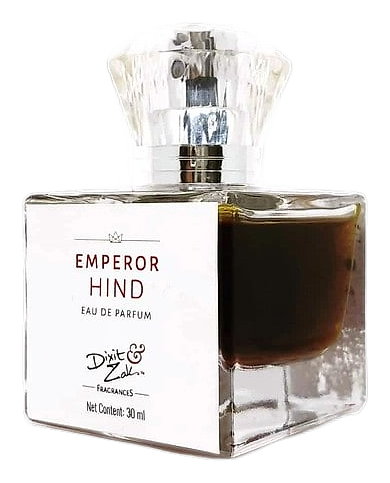
The name carries meaning. 'Hind' means deer in Hindi, and the brand's own copy frames it as an animal that cannot be conquered by its own sense of smell, endlessly searching for something just beyond reach. Nitish Dixit and Zakir Laskar built Emperor Hind as a fragrance about that search. The deer is the metaphor. The scent is the hunt. The wearer's skin becomes the territory. This is not a soft fragrance. It was designed to ask something of the person wearing it, to trust the animalic, to sit with the oud, to let the drydown arrive on its own terms. Launched in 2019 as the house continued building its catalog of character-driven perfumes, Emperor Hind sits alongside Rising Mysore and its successors as one of the more confrontational offerings from the Pune-based house.
The base list is enormous. Thirteen materials in the drydown is not standard practice, it is a declaration. Indian oud anchors everything, but the composition does not stop there. Hyraceum, the fermented secretions of the rock hyrax, adds a leather-animalic layer that most brands handle with restraint. Choya Nakh brings an agarwood smoke nuance derived from burning oyster shells with wood. Civet supplies the raw, feral musk that makes animalic fragrances controversial. Fossilised amber and spikenard ground the blend in resinous antiquity. The result is a base that operates on a different timescale than most Western compositions, slower, stranger, built to outlast the wearer's plans for the day.
The evolution
The opening announces itself in pink grapefruit and sweet orange, tart and bright enough to feel like a different fragrance entirely. Jasmine sambac arrives within minutes, warm and creamy underneath the citrus. Osmanthus adds a fleeting apricot-honey sweetness. This is the diplomatic phase, approachable, even inviting. Twenty minutes in, the champaca heart emerges. Patchouli's earthiness begins to crowd out the flowers. The jasmine shifts from decorative to structural. By the second hour, the animalic layer asserts itself. Civet and hyraceum arrive together, not politely. They smell like warm skin and old leather and something that has never been near a shower. The frankincense surfaces as smoke. The oud settles underneath, resinous and deep. This phase holds for three to four hours. Then the drydown begins its slow surrender. The citrus is gone. The flowers are memory. What remains is oud, musk, ambergris, and the faint ghost of saffron. The sillage shifts from announcing to intimate. This is when people lean closer.
Cultural impact
Emperor Hind arrived in 2019 as one of the more confrontational offerings from a new Indian house, generating discussion among niche enthusiasts for its unapologetic use of animalic materials and Indian oud in a category often dominated by Western brands. The discontinued status has made it a collectible among those who encountered it during its initial release.