The Story
Why it exists.
The beginning
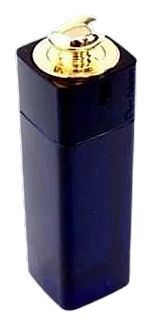
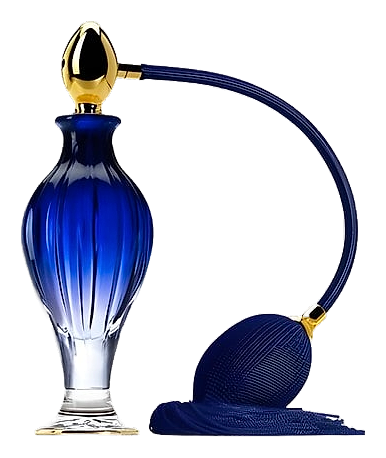
In 2007, Christian Dior marked its 60th anniversary by releasing three limited fragrances, each tied to a modern muse: Stella Tennant, Kate Moss, and Gisele Bündchen. Passage No.8 was Kate Moss's scent, an iris composition touched with leather and violet that the brand described as carrying part of her 'sensual and wild personality.' François Demachy composed all three. Galliano designed the bottles himself, and only 2,000 flacons of each were made, sold exclusively in 30 Dior boutiques at 350 euros apiece. The three-scent lineup was released in tandem with the milestone year, and the trio shared both the perfumer and the designer's hand across every flacon.
What makes the composition worth attention is the restraint in its brief. Three notes, iris, leather, violet, and yet the accords read across a far wider spectrum: powdery, earthy, smoky, even animalic in the drydown. That range comes from how the materials are allowed to push against each other. Iris is cool, almost mineral in its rooty facet. Leather is warm and skin-adjacent. Violet is sweet but turned inward, candied and slightly bitter at once. Demachy built a triangle that refuses to resolve into a single mood, which is why the drydown drifts between lipstick and bonfire depending on the hour.
The evolution
The opening is the quietest part. Violet arrives first, not candied or bright but muted, almost like the dust from a pressed flower between book pages. It sits close, barely above the skin, for the first fifteen minutes, and there's a quality to it that feels withheld rather than shy, more like a thought someone decided not to finish than a timid note. Iris follows and takes over quickly, that cool, suede-like rootiness that reads as powder but wears warmer than you'd expect. The iris has a mineral edge before it becomes floral, and that mineral quality is what gives the opening its slightly aloof character, the kind of coolness that reads as confidence rather than distance. Around the thirty-minute mark, the leather begins to surface, not as a jacket or a saddle but as something smoked, like a paper-thin strip of hide held briefly over a flame.
Cultural impact
Passage No.8 was always going to be a quiet footnote, not a commercial flagship. The 2,000-bottle run and 30-boutique exclusivity made sure of that, and the way those numbers were set shaped everything about how the fragrance was received. A bottle that exists in such limited quantity reads as an object before it reads as a scent, something you encounter in person rather than something you buy on a whim. The Kate Moss association gave it a specific gravity, tying it to a particular fashion moment and a particular kind of wearer without diluting the composition into something merely commercial.
The House
DiorChristian Dior launched his first fragrance, Miss Dior, the same year he showed the revolutionary New Look in 1947. The house has since built one of the most comprehensive luxury fragrance portfolios in existence, from the masculine reinvention of Sauvage to the couture exclusivity of La Collection Privée. Under perfumer François Demachy, Dior balances mainstream appeal with genuine artistry.
The Creator
François DemachyDemachy's work bridges two traditions. He is a Grasse native with deep roots in natural raw materials, yet he embraces modern molecules without hesitation.