The Story
Why it exists.
The beginning
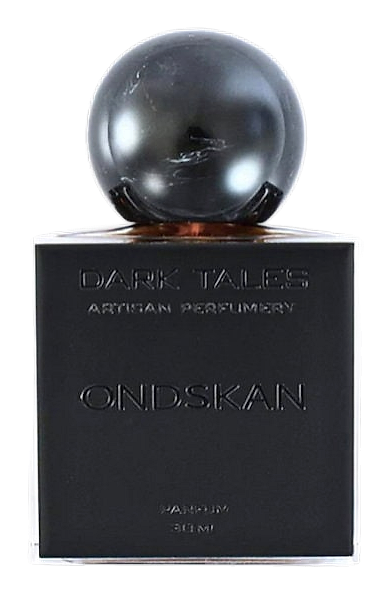
Ondskan is Swedish for evil. Not mischief. Not wickedness. The old, deliberate kind. Dark Tales, the house behind this release, treats fragrance as folklore, horror literature, and seasonal ritual rendered in scent. Earlier compositions like Old Library and Baba Yaga explored paper, cedar, and Slavic myth, and Ondskan pushes further into the dark. The narrative this time was the concept of evil itself, distilled into drops that are cold, bitter, smoky, and animalic. It's a deliberate departure from the clean, gourmand-heavy territory that dominates much of contemporary niche perfumery, and it commits to that proposition from the very first spray. There's nothing safe here, nothing softened, nothing negotiated.
The composition is built on a deliberate collision between ritual and ruin. Green cognac and resinous notes open with a bitter, almost ceremonial charge, then tomato leaf cuts in green and sharp before the smoke takes over. The heart introduces smoked wood alongside mineral notes that read like crushed stone, with vetiver pulling things back toward earth. The base is where the composition stops negotiating. Animalic notes, hyraceum, leather, and blood sit alongside gunpowder and incense, with moss and woody notes underneath. The reference to gunpowder isn't decorative. It's structural.
The evolution
Ondskan doesn't so much develop as commit. The opening reads bitter and resinous, almost like cold cognac poured over green stems in a stone cellar. That green sharpness fades and the smoke arrives, dense, mineral, and dry. As the hours pass the animalic notes push forward, and the leather begins to dry out, turning closer to raw hide than polished jacket. The blood note never announces itself. It shows up in the negative space between smoke and skin, a warmth underneath. The incense and hyraceum eventually take over, leaving a close, dark, almost ecclesiastical drydown that lingers with impressive tenacity. Projection and longevity are above-average, which suits a composition this heavy with intent. The fragrance becomes more intimate as it wears, settling into a private register that asks to be discovered rather than broadcast. This isn't a fragrance that needs the room.
Cultural impact
Ondskan entered the niche conversation carrying the Swedish word for evil, and its naming choice immediately linked the fragrance to a literary tradition that takes darkness seriously. The composition reads as a return to animalic, blood, and hyraceum territory at a moment when much of mainstream perfumery had drifted elsewhere. Within collector circles it has become a frequent reference point in discussions about how indie houses use folklore and horror literature as structural framing rather than decoration. The fragrance earns that attention through the conviction of its construction.