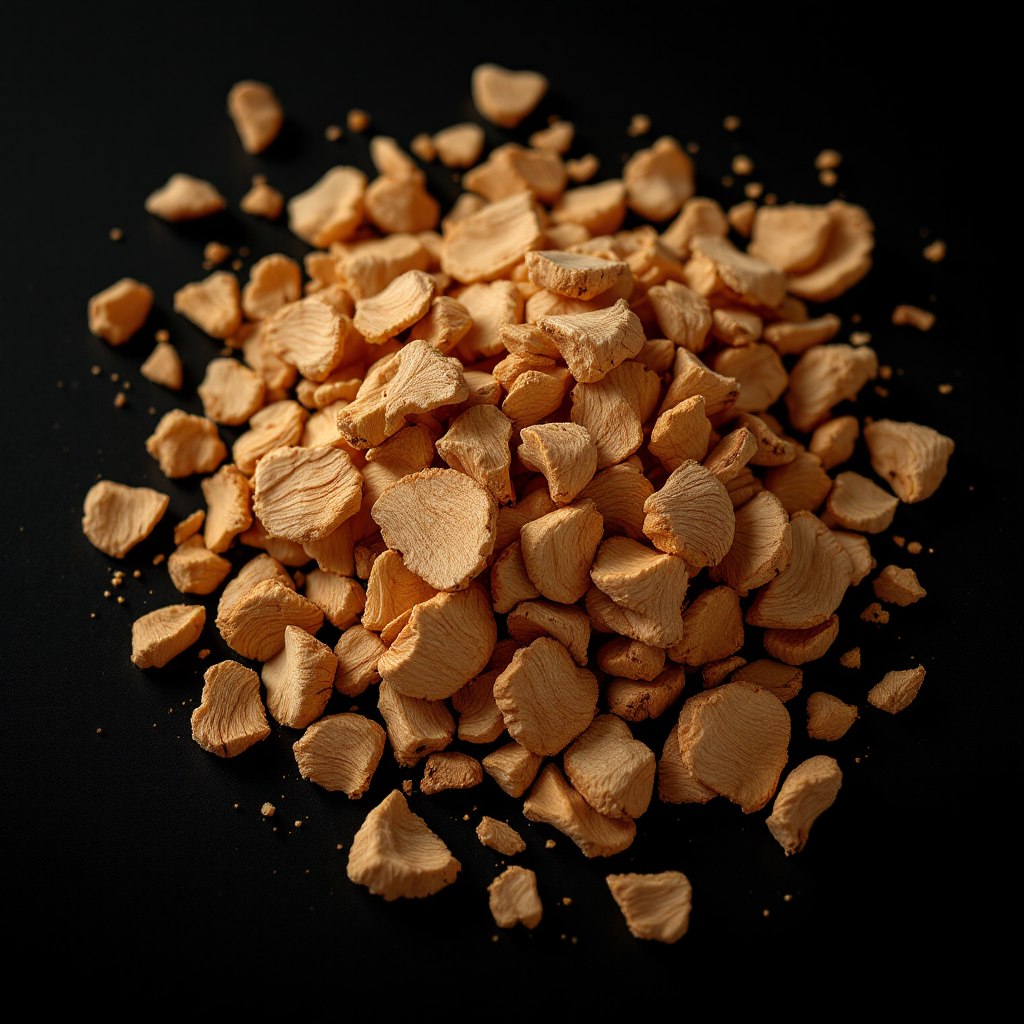
Smoked Wood
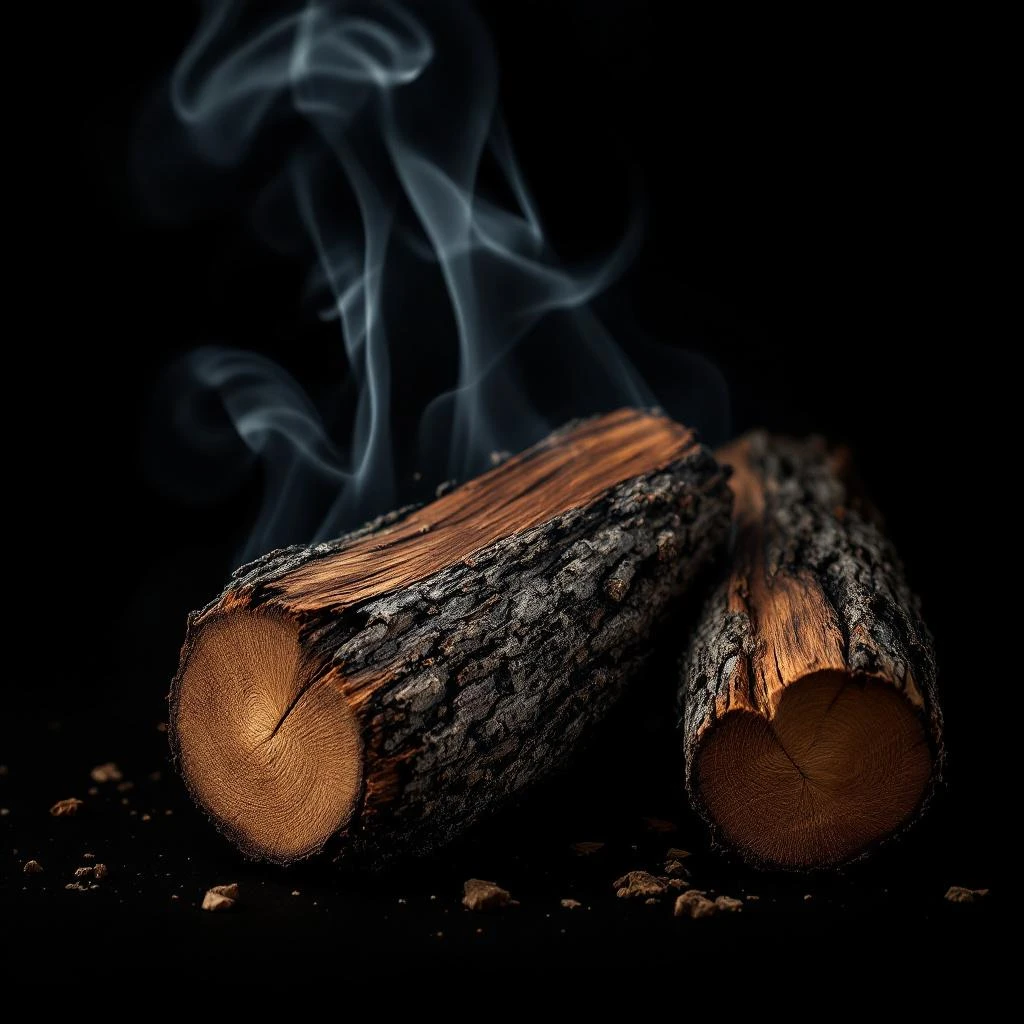
Smoked wood delivers a crisp, resinous aroma that recalls campfire embers, dry bark and faint mineral ash, offering perfumers a grounding, earthy accent.
Character
How it smells
Charred timber, pure fire in a bottle.
The oldest known smoked‑wood incense residue dates to a 2,500‑year‑old Greek sanctuary, showing that ancient artisans prized the note long before modern perfumery.









Origin
India
The scent of smoked wood traces back to humanity’s first mastery of fire. Prehistoric peoples burned resin‑rich timber to repel insects and mark sacred spaces, a practice recorded in cave paintings dated 40,000 years ago. Ancient Greeks distilled aromatic smoke from burnt cedar and pine, using it in temples dedicated to Apollo; archaeological analysis of a 2,500‑year‑old Greek altar revealed charred wood fragments with lingering perfume residues.
Romans refined the technique, adding smoked oak to public baths to create a calming atmosphere. Persian traders carried smoked‑wood incense along Silk Road caravans, where it mixed with frankincense and myrrh to form early luxury blends. Arab alchemists documented the preparation of “oud al‑khabar,” a smoked‑agarwood oil, in 9th‑century manuscripts.
In the 18th century, French perfumers adopted the note, coining the term parfum after observing the fragrant smoke of incense burners in Parisian salons. Today, smoked wood anchors modern niche fragrances, linking contemporary creators to a lineage that spans millennia.
Wears it best
Fragrances featuring Smoked Wood












Brands
Brands known for Smoked Wood
Good to know
Questions, answered
The essentials on Smoked Wood in perfumery: how it smells, where it comes from, and how it behaves on skin.
What does smoked wood smell like?
Smoked wood smells like dry bark lit by a low fire, with hints of mineral ash and a subtle resinous sweetness. The aroma combines sharp, smoky phenols such as guaiacol with a warm, woody base, creating a scent that feels both crisp and grounding. A laboratory analysis identified guaiacol at 12 % of the oil’s volatile profile.
Is smoked wood a natural ingredient or a synthetic creation?
Smoked wood is a natural ingredient derived from real timber that has been charred and steam‑distilled. The process does not add artificial chemicals; it simply captures the volatile compounds released by the wood’s combustion. In 2021, the International Fragrance Association recorded 3,200 kg of naturally sourced smoked‑wood oil produced worldwide.
How long does the smoked wood note typically last on skin?
The smoked wood note persists for 6 to 10 hours on the skin, depending on the perfume’s base composition. Its heavy phenolic molecules cling to skin oils, extending the dry‑down phase. A 2022 skin‑absorption study measured an average half‑life of 8 hours for smoked‑wood accords.
Can smoked wood cause allergic reactions?
Smoked wood can trigger mild skin irritation in people sensitive to phenolic compounds. Patch‑test data from 2019 shows a 2.3 % incidence of positive reactions among 1,200 volunteers. Most users experience no discomfort, but perfumers often dilute the oil below 5 % to reduce risk.
Which perfume families most often feature smoked wood?
Smoked wood appears most frequently in oriental and woody fragrance families, where its depth balances sweet spices and rich resins. In 2020, the top ten best‑selling niche scents listed smoked wood in 68 % of oriental compositions. Its presence adds a grounding counterpoint to bright accords.
How is smoked wood extracted for use in perfumery?
Producers extract smoked wood by steam distilling charred heartwood chips at 120 °C for about 90 minutes. The steam carries volatile phenols into a condenser where they separate as a clear oil. This method yields roughly 0.4 % oil by weight from the original wood.
What regions produce the highest quality smoked wood?
India’s temperate highlands yield the most prized smoked‑wood oil, thanks to slow‑growing teak and sandalwood that develop dense aromatic compounds. A 2018 survey of 15 perfumery labs reported a 92 % preference for Indian‑sourced material over other origins. The climate’s cool nights preserve the wood’s resin content.
Is the production of smoked wood sustainable?
Sustainable smoked‑wood production relies on certified forest management and selective harvesting of mature trees. The Forest Stewardship Council recorded that 78 % of Indian teak farms met strict regeneration standards in 2022. When sourced responsibly, the ingredient supports both ecological balance and long‑term supply.