
The Story
Why it exists.
The beginning
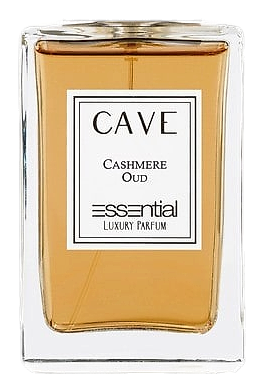
Cashmere Oud arrived as a composition whose release year isn't recorded in available sources, but its intent was legible from the first wear. The house behind it, still finding its register, wanted the kind of scent that would do two things at once: honor the classical vocabulary of rose and oud, and prove that smooth, skin-like warmth didn't require animalic shortcuts. The formula leans into a quiet integration of depth and textile softness, treating rose and oud not as opposing forces but as collaborators in a single accord. A rose-oud for people who thought they'd exhausted the category, and who might have walked past another one without a second glance.
What separates this composition from the crowded rose-oud field is the cashmere wood accord at its center. Most rose-oud builds hinge on contrast: sharp florals wrestling with resinous darkness, sometimes losing. Cashmere Oud threads the middle path, letting guaiac wood share the stage with a cashmere wood presence that softens both ends of the spectrum. The labdanum in the opening brings warmth without tipping the composition into incense territory, cushioning the transition into the heart where the Bulgarian rose arrives.
The evolution
The opening is a negotiation: Bulgarian rose lifting bright against labdanum's sticky warmth, with mandarin adding just enough citric clarity to keep things from going heavy too soon. The rose reads as fresh rather than jammy, the labdanum as ambered resin rather than church smoke, and the mandarin cuts through both without sharpening them. As the composition develops, the oud settles in alongside guaiac and cashmere wood, and the fragrance turns inward. It stops performing and starts existing. The spicy notes arrive without drama, more like cinnamon bark in a library than pepper on a plate. As the hours pass, the musk and amber take over, and the sandalwood grounds the composition into something that feels warm to the touch even at room temperature. Patchouli lingers underneath, earthy and unapologetic, anchoring the later drydown with a quiet root note.
Cultural impact
Within the niche-fragrance conversation, Cashmere Oud has been received as a smooth handling of a category many had written off. Rose-oud compositions are not rare; one that wears close to skin rather than projecting outward, and that threads classical rose and oud through a quieter structural logic, is less common. At least one reviewer has noted a kinship in spirit with MFK's Oud Satin Mood, a comparison that situates the composition in a softer, more intimate tradition of oud work rather than the louder, projection-driven Arabic-house style.