
The Story
Why it exists.
The beginning
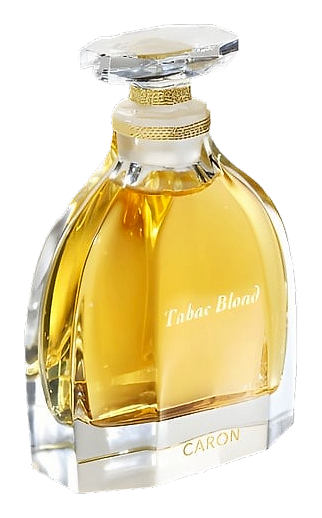
Ernest Daltroff created Tabac Blond in 1919, in the shadow of the Great War, when Paris was inventing itself as the center of everything new. Jazz had arrived. The Charleston was rewriting how bodies moved through space. The city's women were shedding constraint in every direction, hemlines, social roles, assumptions about who a fragrance was supposed to be for. Daltroff, who trusted his nose over formal training, wanted to capture that energy in a bottle. Not the obvious florals of the era, not the powder boxes. Something that spoke to the woman emerging: confident, complex, unapologetically herself. Tabac Blond was his answer, a leather-forward composition that had no precedent and no apology.
The structure is what makes it unusual. Leather opens, yes, but leather in 1919 was a confrontational choice, especially in a women's fragrance. Daltroff tempered it with carnation, a spice that can read as either warm or medicinal depending on its source and dose. The lime note cuts in briefly, a sharp citrus that keeps the opening from feeling heavy before it settles. Then the heart takes over: iris provides the powdery backbone that gives Tabac Blond its characteristic softness, while ylang-ylang adds a floral richness that could read tropical but here stays restrained. Vetiver anchors the whole middle, keeping everything grounded in something earthier than the florals might suggest.
The evolution
The opening hits immediately. Leather, carnation, and a brief flash of lime that disappears within minutes. It announces itself without apology. The heart takes over within ten to fifteen minutes, iris and ylang-ylang arrive together, the powdery iris softening the floral sweetness of the ylang-ylang while vetiver keeps the whole thing earthbound. For the next two to three hours, that's the story: florals against leather, warmth against restraint. The drydown is where Tabac Blond becomes itself. The leather doesn't disappear, it deepens, wrapping around the musk and vanilla as the florals fade. Cedar and patchouli arrive late, adding a woody warmth that stays close to skin. On fabric, it becomes intimate almost immediately, the kind of presence that someone standing beside you will notice before you do. Eight to ten hours on most skin types, longer on clothes.
Cultural impact
Tabac Blond has occupied a singular position in the fragrance canon since 1919, not as a reference point for other releases, but as a benchmark for what leather can do in a women's fragrance. It arrived before the chypre structure was codified, before the floral-woody categories were settled, and it has never fit neatly into any of them. Wearers who find it describe it as the fragrance of someone who doesn't need to explain herself. That reputation has outlasted trends, flankers, and the reformulation cycles that have reshaped most of its contemporaries. It remains what it has always been: a confrontation, dressed as a perfume.