The Story
Why it exists.
The beginning
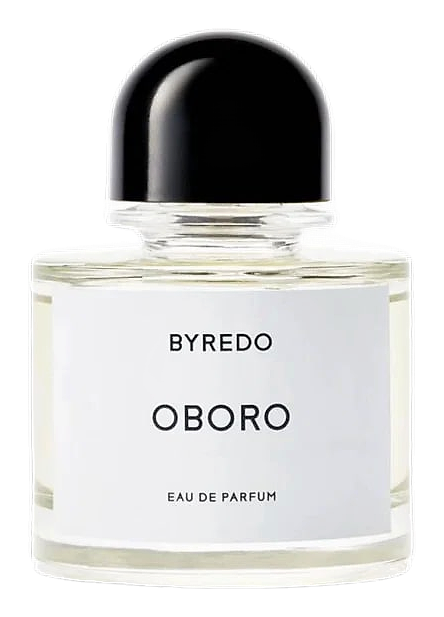
Oboro is a Byredo exclusive, released in 2026 for Japan only, available through the brand's boutiques and Japanese website. The name draws on Japanese, rendered simply as Oboro, suggesting something hazy and atmospheric, an image rather than a literal one, and it shaped the brief Jérôme Epinette worked from: a fragrance that reads as both weightless and grounded, luminous but slightly obscured. Epinette composed Oboro around a salt-led structure, treating salt as a backbone rather than a conventional marine accent. The result is a composition that resists easy categorization, sitting somewhere between mineral coolness and floral lift.
Salt rarely leads a composition in fine fragrance. Placing it in the base, alongside incense and amber, means the perfumer had to let it do something counterintuitive: not smell like the beach, but act like minerality, as a texture that makes peony and violet leaf feel cool to the touch. The ginger and black pepper up top contribute real heat, which gives the salt something to push against. Without that thermal contrast, the whole thing would drift into soapy abstraction. Epinette's handling of the salt shows a perfumer thinking about material behavior rather than convention.
The evolution
The opening belongs to ginger. Not candied, not cooked, ginger as in raw root snapped open, sharp and slightly bitter, with bergamot's brightness running just behind it. Black pepper shows up early too, a dry static that prickles rather than burns. As the composition moves past its opening, peony steps forward, but it's a cooler peony than you might expect, thinned out by violet leaf's green-water clarity and the mineral accord beneath. Violet leaf absolute reads less like a sweet violet and more like something vegetal and aqueous, with a clean, faintly bitter edge that keeps the florals honest. The salt gradually asserts itself through the middle phase, not as a taste on the lips but as a sensation of coolness rising from the skin. Incense arrives in the later stages, slow and smoky, and it pulls the amber forward into the drydown.
Cultural impact
Oboro exists in an unusual distribution space: a Byredo release that bypasses the brand's global network entirely and sits only in Japanese boutiques and the Japanese website. That restraint is doing real work. It positions the fragrance as something location-specific rather than a globally scaled launch, which changes how it gets discussed among fragrance communities. For collectors and enthusiasts who follow regional releases closely, Oboro has become a point of fascination precisely because of its limited access.