
The Story
Why it exists.
The beginning
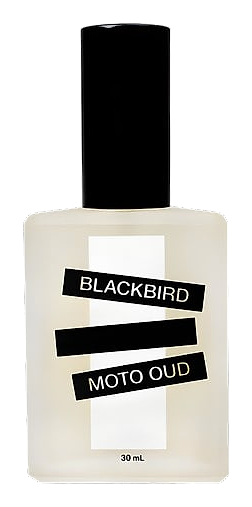
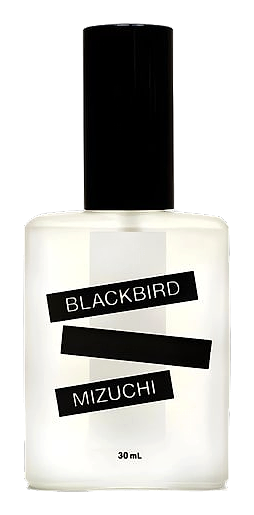
Mizuchi arrived in 2012 as one of Blackbird's original perfumes, created by perfumer Aaron Way. The name comes from the Japanese water dragon, a creature of mist and river depths, reimagined here not as something wild or wet, but as restraint itself. Where other fragrances in the house leaned into smoke or intensity, Mizuchi went quiet. The brief seemed to be: what does a dragon do when it isn't breathing fire? It makes something precise. It makes something that smells like ink drying on good paper.
The material palette is unusually narrow for a fragrance at this price point, paperbark, wood, ink, tobacco. Most compositions build complexity through layering dozens of accords. Mizuchi builds it through reduction. The ink note doesn't smell like a Sharpie or a ballpoint pen. It smells like sumi-e: the Japanese art of black ink painting, where a single brushstroke carries the weight of everything the artist didn't say. That's what this fragrance is after. Not volume. Clarity.
The evolution
The opening hits clean and mineral, paperbark's thin, almost antiseptic woodiness alongside something that reads as ink accord, sharp and slightly astringent. Within fifteen minutes the tobacco arrives, not dark or sweet but dry and present, like the smell of a room where someone has been smoking outdoors and just came back in. The wood deepens. Cedar, or something paperbark's cousin. The drydown takes its time, three to four hours in, and what lingers is a faint amber warmth crossed with the ghost of ink, something that stays close to the skin and doesn't project so much as settle, like the smell of a library book you forgot to return.
Cultural impact
Mizuchi has lived quietly in the niche collector world since 2012, discontinued in 2018 and later reformulated in higher concentration. It sits apart from Blackbird's louder compositions like Pipe Bomb, less statement, more posture. Among fragrance collectors who seek out Japanese-influenced minimalism, it holds a cult position as an example of what reduction achieves when it works.