The Story
Why it exists.
The beginning
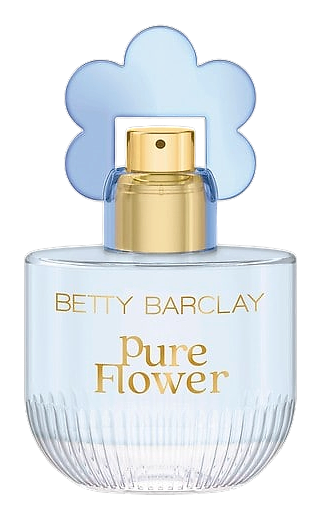
Pure Flower arrived in 2024, composed by perfumer Mirella Pomina. It's a floral that doesn't lean on ornament or concept. Just a clear, aldehyde-led bloom built for daytime skin, the kind of scent that earns its place by smelling good rather than announcing itself. Pomina treats the aldehyde here less like a vintage flourish and more like a lens. It sharpens everything around it. Lavender lands crisp on top, reseda adds a cool green flicker, and the whole opening has the sheen of clean cotton pulled straight from the line. That's the trick. Aldehydes in this register don't shout about being classic. They just make everything else look more vivid. The composition reads as deliberate from the first spray. Nothing crowds the top.
What makes the composition work isn't any single note but the spacing. Aldehydes and lavender together create an almost tonic brightness, the kind of clarity that makes softer florals read louder. Rose and peony in the heart aren't competing for attention. They float, cushioned by that sharpness, so neither one turns soapy. The base pulls it all back toward skin. Musk, a thread of warm amber, vanilla kept restrained rather than gourmand. Put together, the whole thing feels less like a floral perfume and more like a clean one that occasionally remembers it's allowed to be soft.
The evolution
The first quarter hour belongs to the opening. Aldehydes lift the lavender into something almost metallic, and reseda gives it that cool, slightly bitter green edge. It smells like the moment right after you wash your face in cold water. Sharp. Awake. Almost too bright to call pleasant. The aldehydes carry most of the weight here, and the lavender takes on a quality it rarely shows in other compositions. It's brighter, more lifted, almost sparkling. The reseda keeps it from drifting into pure freshness by adding that herbaceous green note, the smell of stems rather than petals. Together the opening has the texture of something synthetic and natural at once, a combination that can read as either interesting or off-putting depending on your tolerance for aldehydes. By the second hour, the aldehyde haze has thinned enough for rose to slip through. Not a dark, jammy rose.
Cultural impact
Pure Flower is a 2024 composition by Mirella Pomina that leans into aldehydes as a working ingredient rather than a nostalgic gesture. The fragrance fits comfortably into spring and summer rotation, where its clean character makes the most sense. Wearers reach for it when the weather warms up, when the days get longer, when heavier fragrances start to feel like too much. The composition's soapy-fresh character is polarizing in a specific way. Some love it for that exact reason, the way it smells like clean skin and just-washed hair, the way it stays appropriate in almost any social situation.