
The Story
Why it exists.
The beginning
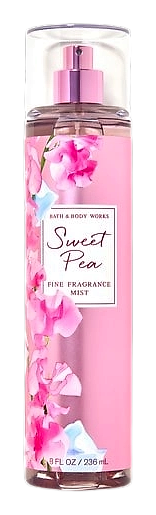
Sweet Pea arrived in 2007 with a botanical so specific it borders on odd. Not rose, not jasmine, peas. A flower most people have never smelled in real life, rendered in a composition that smells exactly like the name promises. Green and sweet, with a dewy freshness that reads as clean without trying to be anything else. The naming works because the fragrance delivers on the promise, and the promise is strange enough to be memorable. There's an honesty to the green-pea note that feels intentional rather than accidental, the kind of choice that shows someone understood what they were building.
What makes Sweet Pea work is the execution of its accord. When bergamot and rhubarb open sharp and tart, there's a watery quality keeping everything from turning cloying. Freesia adds that characteristic cool-floral note, while heliotrope in the drydown delivers the powdery warmth that makes people describe this as clean even though it shares almost no ingredients with soap. The fruity element adds brightness without sweetness overload, floral without headiness. Sandalwood anchors the base just enough to keep the whole composition from disappearing entirely.
The evolution
The opening announces apple and rhubarb first, sharp, tart, a little vegetable. Ten minutes in, the sweet pea arrives and the whole composition softens, moving toward that characteristic dewy quality. Freesia leads the heart phase, followed by raspberry adding a fruit layer that stays on the right side of sweet. Heliotrope begins its transition around the two-hour mark, subtle, powdery, almost invisible unless you're looking for it. The drydown holds for another hour or two: sandalwood and musk, warm and close, never quite disappearing. The sillage stays moderate throughout, you'll smell it, the person next to you might if they're leaning in. The next morning on fabric, there's a faint green-pea-and-sugar sweetness that only registers when someone gets close. And that's fine.
Cultural impact
Sweet Pea has been in continuous production since 2007, a rare feat in mass-market fragrance where turnover is expected. It occupies a specific position in the Bath & Body Works catalog: floral but not sweet, fresh but not citrusy, synthetic but not aggressively so. The green-pea character is unusual enough to avoid smelling dated, and that balance is why it works as an introduction to fragrance without demanding anything from the wearer. People who discovered it early still reach for it later, not because it's nostalgic but because it holds up.