The Story
Why it exists.
The beginning
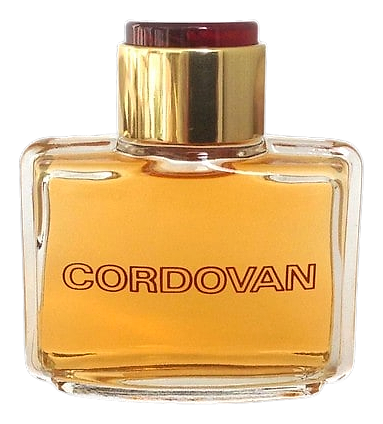
Cordovan arrived in 1982, and it wears that year on its sleeve without apology. This is an oriental fougère with real weight to it, a composition that opens with bright citrus and settles into something dense and amber-soaked within the first hour. The litsea cubeba and lemongrass give it a sharp, almost citronella-like energy up top, but there's nothing delicate about how the fragrance announces itself. It smells like it was built for a man who wanted cologne that actually smelled like cologne, not some whispered skin scent you have to press your nose to your wrist to find. Over the course of a wear, the carnation and herbal middle notes do the heavy lifting, lending a soapy, floral warmth that keeps things from going too austere.
What makes Cordovan interesting is how it stacks its categories. It's labeled an oriental fougère, which already tells you there's tension in the brief. Fougères traditionally run cool, herbal, lavender-anchored. Orientals go warm, resinous, sweet. Cordovan tries to live in both, and mostly pulls it off. The litsea cubeba and lemongrass opening reads sharp and almost citronella-like, a far cry from the polite bergamot you'd expect from a mainstream American men's release of that era. Then the carnation steps in, soapy and clove-edged, which is where the fougère DNA reasserts itself. Tonka bean and amber in the base give it the oriental backbone.
The evolution
The first ten minutes are all litsea and lemongrass, bright and almost grassy, with a soap-bar sharpness that lands like running a razor over a clean towel. Around the fifteen-minute mark, the carnation walks in, pink and clove-spiced, and the whole thing softens into something more floral and less aggressive. The herbal notes hum underneath, giving the heart stage a green backbone that keeps it from going sweet. By the second hour, the tonka bean and amber have settled into a warm, slightly powdery drydown with a castoreum-styrax quality that one reviewer compared to a pair of tight blue jeans. It stays close to skin rather than projecting wide, and the soap-floral-warm character holds steady through hour four. By hour five or six, what's left is a quiet, musky amber with a whisper of tonka, intimate and unfussy. The next morning on a scarf, it reads like faded cologne and clean laundry, which is arguably where Cordovan is most itself.
Cultural impact
Cordovan has earned its place among the more recognizable 1980s American masculines, even if it never achieved the household-name status of some of its contemporaries. The litsea-lemongrass opening gives it an immediately recognizable character, a bright and grassy signature that sets it apart from the heavier orientals dominating the decade. Wearers tend to remember the carnation heart, a soapy and slightly floral middle that keeps the composition from going flat or overly sweet. The tonka and amber base anchors everything in warmth, lending the drydown a powdery, musky intimacy that lingers on skin and clothing for hours.