The Story
Why it exists.
The beginning
Esprit de Chine translates to "Spirit of China", yet the fragrance is unmistakably French. It draws from Jean Desprez's original Crepe de Chine, launched in 1925, which became one of the defining florals of its era. Auguste Michel, the house's namesake, was a French perfumer working in Moscow during the 1920s, a time when French perfumers held prominent positions in Russian court and aristocratic circles. The Auguste house revives Michel's classical approach, offering careful interpretations of enduring fragrance families rather than chasing trend. This particular scent belongs to the Chine family, a branch of the Oriental tradition built on amber, benzoin, vanilla, and oriental resins. Michel's interpretation captures the precise moment when French perfumery was experimenting with something softer, more intimate, more textured than what came before it.
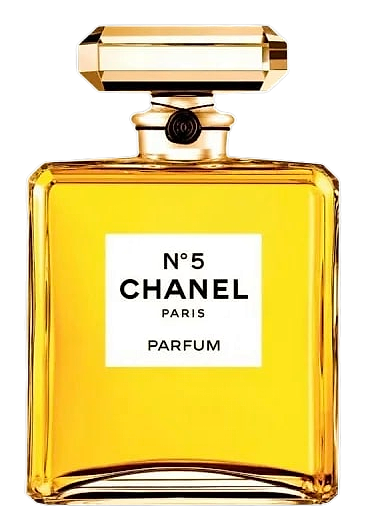
Esprit de Chine belongs to a classical fragrance family that endures as an olfactory language, not a period curiosity. The Chine category carries its own logic, its own signature materials, its own emotional register. What makes this composition interesting is how the aldehydes behave, those hard-to-define organic compounds that give it that vintage talcum powder softness, the sense of imaginary flowers, clean soap. The same compounds that made Chanel No. 5 famous. But here they feel different. Less laboratory, more garden. The bergamot opens bright, then gives way to the warmth of ambrette and orange blossom. The heart is carnation, that warm, clove-like spice that grounds the florals.
The evolution
The opening is bergamot and aldehydes, that talcum powder brightness that announces without shouting. Bergamot provides the citrus spark, orange blossom the bitter floral warmth, ambrette the musky seed underneath. Thirty minutes in, the aldehydes begin to soften. The white florals arrive: lilac first, then lily of the valley. The carnation is the tell, warm spice beneath the softness, the thing that keeps it from becoming just pretty. This is the heart phase. It lasts two to three hours on most skin types. Lilac has that anise-like freshness, slightly green, slightly sweet. Lily of the valley is pure delicacy, small white flowers, the smell of spring mornings. Together with carnation's warmth, it creates something that feels genuinely 1920s: floral but not sweet, soft but not weak. The drydown is where the oakmoss takes over. Forest-floor earthiness, the green depth that makes a Chypre a Chypre. Sandalwood adds creaminess, white musk adds softness. The aldehydes never fully disappear, they fade into the talcum powder base, staying close to the skin.
Cultural impact
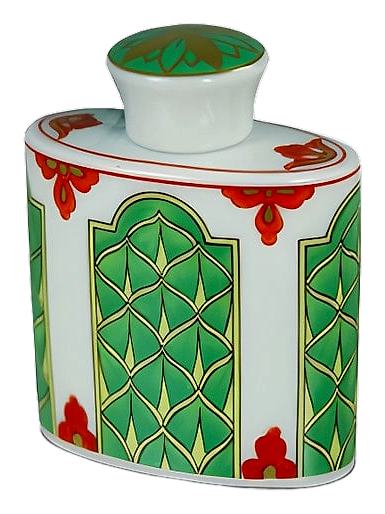
Esprit de Chine is a reconstruction of Crepe de Chine, the 1925 Jean Desprez fragrance that was enormously successful in Paris until the 1970s. The original remained in production for five decades, a rare achievement that speaks to its particular combination of aldehydes, white florals, and powder. Auguste's version uses three formulas from Grasse perfumers created during 1905 and 1920, packed in handmade porcelain bottles with cork stopper. The aldehydes, those organic compounds responsible for the vintage talcum powder character, place this firmly in the Chanel No. 5 moment, when French perfumery was revolutionizing what a fragrance could be. But where Chanel No. 5 chose abstraction, Crepe de Chine and its descendants chose flowers.