The Story
Why it exists.
The beginning
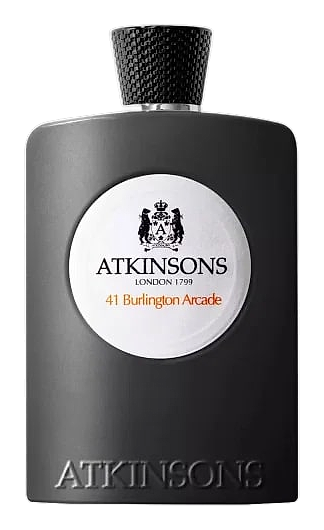
Atkinsons has occupied some of London's most storied addresses since 1799. By 2017, the house had moved again, this time to 41 Burlington Arcade, the glass-roofed shopping passage that runs between Piccadilly and Bond Street like a curated corridor of old money and new money pretending not to notice each other. Named for this new flagship, 41 Burlington Arcade captures what it means to belong to that world without needing to announce it. The brief: translate the spirit of a contemporary Mayfair boutique, its polish, its wit, its refusal to be ordinary, into scent. Julie Pluchet, who grew up in the bucolic French countryside, was given the creative freedom to chart her own course. Her response was to reach for something unexpected at the center of an English fragrance: black licorice. Not as a garnish. As the point. The brief asked for refinement. Pluchet delivered it, then complicated it.
What makes 41 Burlington Arcade unusual is the structural gamble at its center: building a fragrance around licorice, a note that polarizes by instinct, and trusting the surrounding materials to make it cohere rather than clash. The bet pays off because the composition doesn't treat licorice as a trick. It treats it as the main event. Around that licorice heart, the structure is carefully calibrated. Pink pepper from Reunion Island and West Indian Bay leaf from Dominica provide an aromatic freshness that lifts the composition without diluting it. Transparent floral notes dial up brightness to keep the whole thing from collapsing into darkness.
The evolution
The opening is immediate. Citrus, lemon, grapefruit, arrives bright and confident, followed within minutes by a white pepper spark that prickles the air. The citrus doesn't linger. It clears a path. At the thirty-minute mark, the licorice announces itself. Not a whisper. A statement. Anise-forward, dark and bittersweet, it colonizes the heart completely. Cardamom and nutmeg lean in around it, adding warmth and a soft spiced quality that prevents the licorice from reading purely sweet. This is the fragrance's longest phase, a solid four to five hours where the composition is dominated by that singular, unapologetic licorice presence. The drydown doesn't replace the licorice so much as complicate it. Vetiver and Indonesian patchouli begin to rise from beneath, earthy and green. Cedar adds structure. A thread of smoke curls through like an afterthought that isn't an afterthought. Musk softens everything, holding the base together. On fabric, the smoke and cedar outlast everything else, present faintly the next morning.
Cultural impact
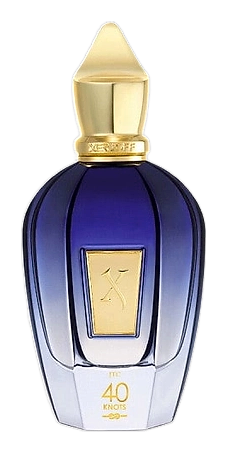
41 Burlington Arcade occupies an interesting position among contemporary fragrances: it commits fully to a polarizing note where many compositions hedge. The licorice heart is a deliberate choice, not an accident, and that clarity of intent has earned it a following among wearers who want a fragrance with a genuine point of view. Compared to contemporaries like Kilian Intoxicated and Xerjoff 40 Knots, it trades some of the projection drama for a more intimate, persistent drydown, the kind that stays close to the skin and rewards proximity over distance.
The House
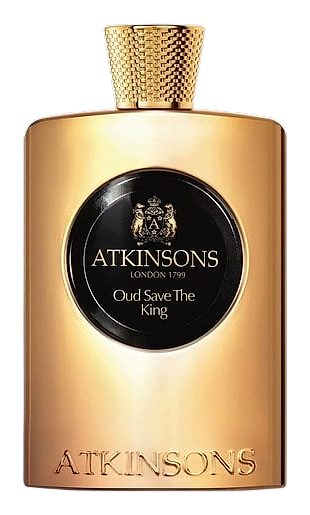
AtkinsonsAtkinsons is a legendary British perfume house founded in 1799 by James Atkinson, a young entrepreneur who arrived in London from Cumberland with fragrance recipes, bear's grease balm, and a real bear. Appointed Royal Perfumer to King George IV in 1832, the house has crafted scents for European royalty, Napoleon, and discerning fragrance lovers for over two centuries. After a period of dormancy, Atkinsons was relaunched in 2013, bringing its heritage of British elegance and bold creativity to contemporary audiences.
The Creator
Julie PluchetThe hallmark of Pluchet's work is balance achieved through contrast. She reaches for classical architecture in her compositions, then introduces a contemporary tension that keeps the fragrance feeling alive.