The Story
Why it exists.
The beginning
There's something grounded about the way Anya McCoy composed Temple, and you can feel it from the moment the fragrance touches skin. She built the 2007 formula around oud agarwood, treating it not as a decorative flourish but as the structural foundation, with a bright architecture of citrus and green spice rising above it like a canopy over old growth. McCoy's work in perfumery was shaped by deep engagement with natural materials, a discipline that shows in every facet of this composition. The fragrance sits at the meeting point of two preoccupations: the spiritual stillness its name suggests, and the material reverence required to work with an agarwood of this depth and character.
What makes Temple unusual is the way it pairs a camphoraceous, almost mentholated brightness with genuine oud depth. Borneol crystals share a chemical family with camphor, which is why the opening reads sharp and aromatic rather than simply fruity. The distilled orange juice in the top notes isn't a gimmick, it behaves differently from expressed peel, carrying more of the fruit's living acidity. Mimosa in the heart adds a green-honey facet that softens the transition into agarwood without sweetening it. The result is a composition that refuses to sit in any single genre: not quite a classic oud, not a straightforward citrus cologne, and not quite a green floral either.
The evolution
Temple opens with a bright skirmish on skin. Distilled orange announces itself sharp and juicy, almost like biting into the fruit with the pith still on, and the borneol cuts through with that eucalyptus-cool clarity that makes the whole top feel medicinal in the best sense, like something you'd find in an apothecary cabinet lined with camphor and citrus peel. As the composition settles, the mimosa enters with its powdery green-honey character, and the spices begin to anchor the brightness. Cassia brings Ayurvedic warmth that pushes against the cool borneol, and the fragrance starts to tilt from luminous toward balanced, neither facet winning outright. The oud doesn't arrive with fanfare. It accumulates in the base, deepening beneath everything, adding a resinous, almost barnyard complexity that reshapes the citrus and spice above it into something meditative and still.
Cultural impact
Temple occupies a rare corner of contemporary perfumery. Most natural fragrances lean simple or skin-toned, content to offer a single botanical impression worn close to the body. Most oud-forward compositions, by contrast, rely on synthetic reconstructions to deliver their character at accessible prices. Temple does neither. The agarwood at its base is sustainably sourced, an unusual choice for a small independent house, and the composition refuses to treat that material as a mere supporting note.
The House
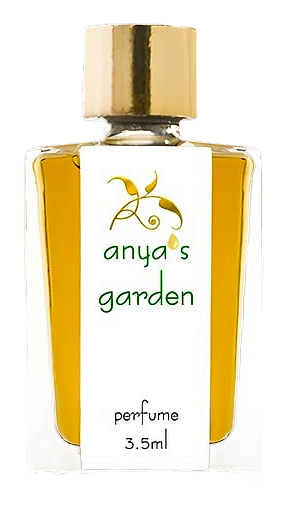
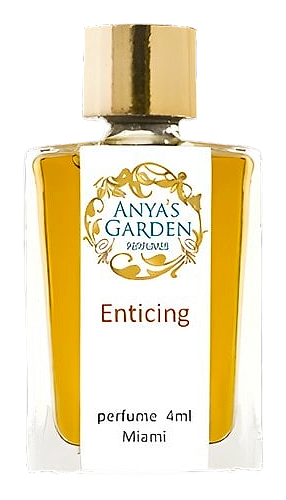
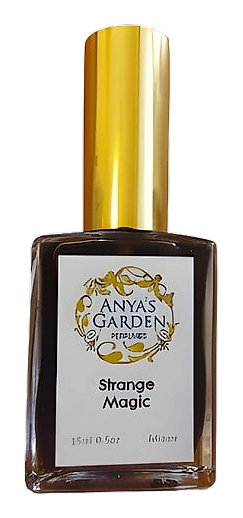
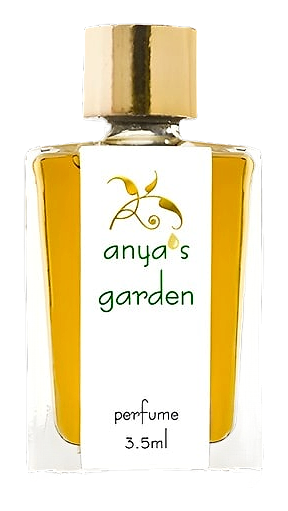
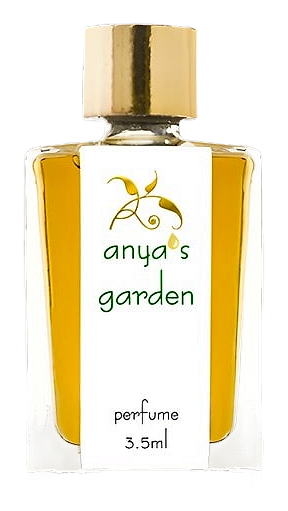
Anya's GardenAnya's Garden Perfumes is a Miami-based natural perfumery house founded by Anya McCoy. The brand specializes in 100% natural perfumes, handmade in small batches using botanical ingredients. McCoy established what is recognized as the first modern natural perfume line in the United States with her debut in 1991. Her current collection includes fragrances such as Temple, Strange Magic, White Smoke, Royal Lotus, Fairchild, River Cali, Star Flower, Pan, and Ylang Tincture 2014, each crafted to highlight the complexity and depth of natural aromatic materials. Beyond creating fragrances, McCoy has played a significant role in educating and nurturing natural perfumers globally through her instructional work dating back to 2002.
The Creator
Anya McCoyMcCoy draws from tropical botanicals and traditional aromatic plants, reflecting her background with Anya's Tropical Essences. Her formulations showcase her technical precision with naturals, balancing volatile top notes against longer-lasting base materials.