The Story
Why it exists.
The beginning
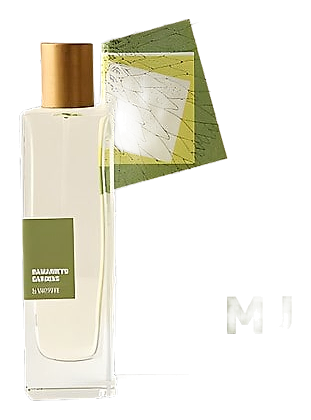
Anthropologie's A Rather Novel Collection launched in 2009 as a curated series of six fragrances, each composed by a Givaudan perfumer and built around a place, a mood, a story. Hamarikyu Gardens was Marypierre Julien's contribution to the lineup. Julien composed the fragrance with green tea, bergamot, and lemon verbena, a pairing that reads as a walk through green space rendered in scent. The bergamot and lemon verbena arrive together at the top, bright and herbal, before the green tea takes over and settles into the skin. Amber warms the base from underneath, adding a golden softness that anchors the brightness. What Anthropologie built wasn't a conventional perfume release but a small, themed library of six places a customer could step into through scent.
Green tea as a dominant note is a gamble in fragrance. It can read thin, watery, or like a candle from the wrong aisle. What makes this composition work is the decision to anchor the tea in bergamot rather than letting it float alone. The bergamot gives the top a citrus spine, sharp enough to hold interest for the first thirty minutes, while the lemon verbena adds a green herbal snap that keeps the tea from collapsing into something indistinct. Amber arrives underneath, a low warmth that prevents the whole thing from evaporating. The accord structure is simple but intentional. Three citrus-green-aromatic notes on top, amber at the base. Nothing to hide behind, and nothing needs hiding.
The evolution
The first five minutes are all citrus. Bergamot and Amalfi lemon hit simultaneously, bright and almost bracing, the kind of sharp, clean snap that wakes up a room. Verbena threads through them with a green herbal sharpness that signals something more interesting than a standard eau de cologne is happening. Around the fifteen-minute mark, the green tea steps forward. It doesn't announce itself, it settles in, the way a second movement follows a first without fanfare. From thirty minutes to about three hours, the fragrance reads primarily as tea on skin, clean, slightly vegetal, faintly sweet in a way that suggests honey without any actual honey note. The amber arrives gradually underneath, warming the composition from a distance, giving the tea something to rest on.
Cultural impact
Hamarikyu Gardens finds its audience through serendipity more than marketing. It's the kind of scent people discover through a store display or receive as a gift and end up wearing for years without ever seeing it reviewed or hyped. There's a particular kind of loyalty that builds around a fragrance like this, one that rewards consistent wear rather than seasonal attention. Its wearers tend to describe it in practical, affectionate terms: a daytime scent, a work scent, a go-to for warm months. That quiet reliability, doing its job without asking for fanfare, is what gives it staying power on vanities and in bathroom cabinets.