
The Story
Why it exists.
The beginning
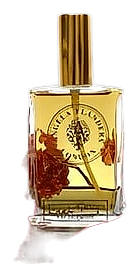
Angela Flanders named this one Earl Grey, and the scent reaches for the spicy-citrusy, woody chypre side of the British tea tradition rather than the politely diluted bergamot version most people expect. Launched in 1994, it arrived as part of the house's Signature collection, a line that carries the particular character of Angela's Columbia Road shop. The composition is a dry and warm woody chypre: bergamot for the bright opening, palisander rosewood for a tea-like, slightly bitter heart, and patchouli driving the base. There's no sweetness to soften the edges, no modern shortcuts, no sugar or vanilla tucked in to round things off. What you smell is what you get, and what you get is closer to steeped leaves and wood shavings than to anything candied.
What makes Earl Grey unusual is how direct it feels. The structure is honest and unadorned, built around a clear conversation between a handful of well-chosen materials rather than a crowded chorus competing for attention. The palisander rosewood in the middle isn't decorative. It bridges the citrus brightness of bergamot with the earthy depth of patchouli, carrying a faintly woody, slightly bitter character that reads as tea leaves steeping too long. Alongside it, notes of tea, palmarosa, and clove add their own quiet accents, warming the heart without crowding the central exchange.
The evolution
The first ten minutes belong entirely to bergamot. Sharp, almost tart, with a clean brightness that doesn't linger politely. It cuts off as the rosewood enters, bringing a warm, woody bitterness that smells like steeped tea left to go cold on the counter. This is the most composed phase: dry, aromatic, slightly austere. The kind of scent that works in a quiet room with good light. Around the two-hour mark, patchouli takes command. It doesn't arrive gently. It deepens the composition into something earthier and more grounded, with a warmth that feels more like worn fabric than fresh linen. The spice notes settle in alongside it, adding a faint clove-like heat without ever turning sweet. By hour six the composition has condensed into a close, warm base of patchouli and spice on the skin. On clothing the next morning, you get a softer version of that same dry warmth, still unmistakably patchouli, still unmistakably tea. Moderate sillage means it stays personal. You smell it on yourself; others catch it when they're close enough to matter.
Cultural impact
Earl Grey wears its character openly: unfussy, handcrafted, and unapologetically dry. It's the kind of fragrance that tends to be chosen on purpose, by someone who knows what they're after and isn't browsing for something easy or crowd-pleasing. The composition leans into its own register rather than chasing current trends, which gives it a staying power that has little to do with marketing cycles. It reads as classic and grounded, more interested in longevity of appeal than in seasonal buzz. For those who find their way to it, the scent tends to become a quiet fixture, revisited and worn repeatedly rather than rotated through and forgotten.