The Story
Why it exists.
The beginning
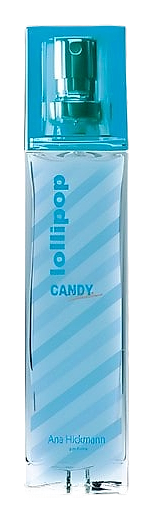
Lollipop arrived in 2012 as part of Ana Hickmann's Candy Collection, a candy-themed grouping within a Brazilian fragrance portfolio. The brand, tied to one of Brazil's most recognizable models, had already released signature scents and was reaching for something lighter. Lollipop was the candy-colored answer to that impulse, composed to read as a treat on the skin rather than a serious floral or oriental. The composition went to perfumer Carmita Magalhães, who built it around a fruit-and-nut architecture instead of the usual floral heart. Strawberry, apple, apricot, and pineapple open the scent with a bright, jostling sweetness that leans more toward orchard fruit salad than anything syrupy.
What makes this composition worth pausing on is the Brazil nut in the heart. Lollipop skips the traditional floral scaffold entirely and drops a nut note into the center instead, letting it carry the middle phase. That choice gives the fragrance a creamy, almost marzipan-like warmth between the bright fruit top and the vanilla-sandalwood base, bridging the two without any flowers doing the lifting. The violet keeps things from going purely nutty, lending a faint powdery iris-like coolness that edges the heart toward something more nuanced.
The evolution
The first thirty minutes are pure carnival. Strawberry lands first, loud and jammy, followed quickly by apple and pineapple that sharpen the sweetness into a brighter, almost tropical burst. Apricot rounds the corners so it doesn't read as sour candy. This is the phase that smells like the name, and it doesn't apologize for it. Around the forty-minute mark the fruit steps back and Brazil nut takes the wheel. Violet threads in quietly underneath, powdery rather than green, more orris than stem. The whole thing warms up considerably. What was candy-sweet becomes something closer to a warm nut tart, the vanilla starting to surface but not yet dominant. By the two-hour mark the base takes over properly. Vanilla and tonka settle into a soft, creamy plateau, sandalwood adding just enough wood to keep it from being pure dessert. The fruit is a memory now, a faint sweetness in the vanilla rather than a top note.
Cultural impact
Lollipop sits in a specific corner of the early-2010s fragrance landscape as a Brazilian candy-gourmand composition. It's the kind of sweet, fruity, vanilla-drenched scent that defined its moment, and it wears that identity without hedging. The opening is bright and immediate, with strawberry, apple, apricot, and pineapple rushing out in quick succession, and the composition as a whole leans into treat territory rather than perfume-as-fashion. The Candy Collection framing places Lollipop squarely in that confection-inspired space, and the result is a fragrance that reads as playful, approachable, and a little indulgent.