The Story
Why it exists.
The beginning
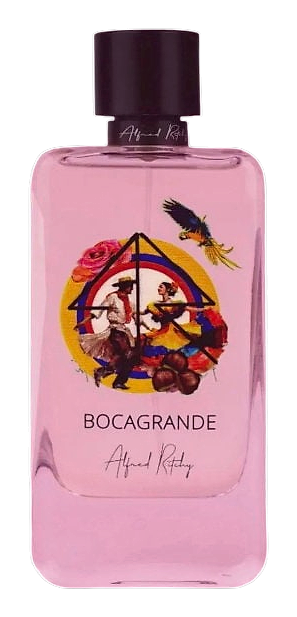
Bocagrande is named for the storied Caribbean peninsula in Cartagena, Colombia. A sun-bleached stretch where colonial facades glow amber against white sand and the salt breeze carries the sound of brass from beachside bars. Alfred Ritchy built this composition in 2026 as part of a house philosophy that treats fragrance as bottled geography, each release tethered to a place rather than a marketing concept. Bocagrande belongs to that travelogue. The opening reads as fruit lifted straight from a vendor's table, crisp and slightly green, followed by pink pepper that sparks against the sweetness like light catching glass. Through the heart, rose absolute and jasmine absolute braid together, lifting the composition into something closer to floral air than floral bouquet.
What makes Bocagrande feel grounded is the hazelnut at its center. Hazelnut gives a creamy edible softness with a nuttier, more roasted edge, almost savory in the way good praline never quite is. It bridges the fruit-sweet pear above and the resin-heavy base below without the confectionery weight that many amber florals carry. The hazelnut keeps the sweetness tethered, reminding you that something toasted and real is underneath all that floral lift. The incense is dosed gently too, more curl than cathedral, more suggestion than smoke. That restraint is what lets the rose breathe.
The evolution
The first fifteen minutes belong to pear. Crisp, almost cold, with pink pepper flickering behind it like light through slatted blinds. There's a green edge to the opening, the pear reading more like fruit bitten into than fruit blended into something else. The pepper doesn't sting so much as crackle, bright and slightly dry, setting the fruit in motion. Then the shift. Hazelnut arrives and the whole composition turns golden, the pear softening into something rounder, jasmine absolute threading through alongside rose, which here smells less like a bouquet and more like a single petal crushed between warm fingers. The heart runs for about two hours, sweet but never candy-sweet, the rose doing most of the emotional work while the jasmine lurks beneath it like a shadow with its own perfume. By the third hour the base is fully in command.
Cultural impact
Bocagrande takes its name from the Caribbean peninsula in Cartagena, and that geographic reference runs through every layer of the composition. The place itself reads as boardwalk glamour meeting colonial stone, where sea breeze and the incense-heavy air of old churches share the same shoreline. The fragrance mirrors that duality without effort: a bright pear-and-pepper opening behaves like salt air, while the amber, benzoin, and incense base behaves like stone warmed by candle smoke and afternoon heat. The rose at the heart softens the contrast, pulling the two registers into a single breath.