
The Story
Why it exists.
The beginning
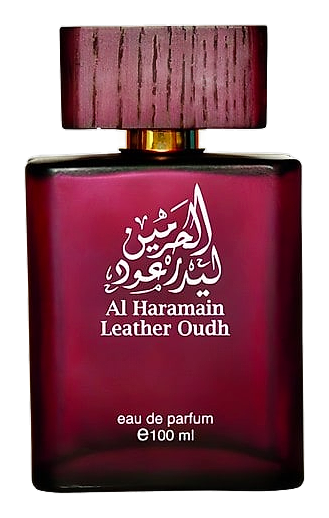
Leather Oudh arrived in 2016 from Al Haramain, a house built on oud and the belief that fragrance carries memory. The brief was simple: take the depth of leather, anchor it in oud's resinous warmth, and don't let either ingredient shout over the other. Raspberry and thyme opened the conversation, a tart, herbal counterpoint that kept the composition from collapsing into predictability. It was designed as a bridge between what the Gulf perfume tradition demands (presence, longevity, statement) and what a wider world was beginning to crave (warmth that invites rather than overwhelms).
The structure here is unusual for a leather-forward scent: the sweetness doesn't arrive last, it threads throughout. Jasmine in the heart doesn't perform florals, it acts as a bridge, softening the cashmere wood and keeping the frankincense from turning austere. The base layers leather, amber, and musk into something that reads as skin-warm rather than accessory-cold. Cedarwood grounds the whole thing, preventing the composition from floating into abstraction. It's a leather scent for people who want to be smelled, not announced.
The evolution
The first twenty minutes are all negotiation. Raspberry and thyme arrive together, the fruit bright and almost jammy, the herb green and slightly medicinal. They don't fight, but they don't fully trust each other either. Then frankincense enters. Not the church-smoke stereotype, something cleaner, drier, like resin heating in the afternoon sun. By hour two, the leather has arrived. It doesn't storm in. It settles, slow and warm, under the amber and musk. The jasmine is still there, faint now, keeping the animalic honest. By hour four, this is a skin scent, close, intimate, the kind of presence you discover rather than encounter. It lasts eight to ten hours on most skin types. The next morning? A faint amber-tobacco warmth on the wrist. Worth washing off, or worth remembering.
Cultural impact
Leather Oudh occupies an interesting position in the modern leather fragrance landscape, more approachable than niche leather specialists, more substantive than mainstream woody scents. It draws wearers who want leather's warmth without its aggression, and oud's depth without its intimidating price. The sweet-fruity opening makes it accessible; the lasting power keeps it memorable. It's the kind of fragrance that converts skeptics of oriental perfumery, not by softening its Gulf heritage, but by translating it into a language that welcomes newcomers.