
The Story
Why it exists.
The beginning
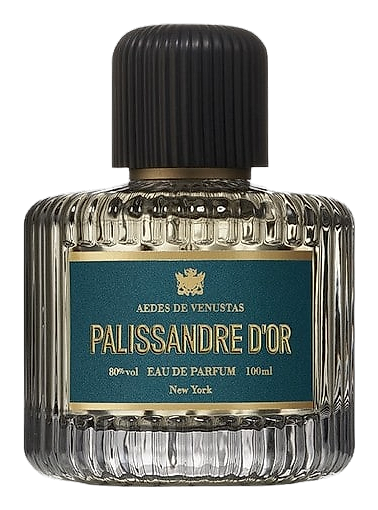
Palissandre d'Or was released in 2015, signed by master perfumer Alberto Morillas, and named for palisander, rosewood in French. The reference is specific: Dalbergia sissoo, the Indian rosewood historically central to that region's material culture. Aedes de Venustas has always approached fragrance as intellectual and artistic practice rather than commercial output, and this composition reflects that orientation. Morillas translated the material's character, creamy, milky, slightly smoky, into a structured woody-spicy work that stays true to the source material without romanticizing it.
What makes Palissandre d'Or unusual is the triple-cedar foundation layered beneath that milky rosewood. Nootka cypress, Virginia cedar, and Chinese cedar create a complex woody base that most fragrances would stop at one of. Add Copaiba balsam, a resin that adds both sweetness and structure, and you get a base with unusual depth. The spiced heart (cinnamon, pink pepper, coriander, nutmeg) isn't there to complicate things. It's there to warm the rosewood enough to glow. The ambrette seed in the opening is a quiet move: musk without animalic force, a clean entry before the real work begins.
The evolution
The opening arrives softly, ambrette's green-musk whisper, almost shy. No drama at the top. What follows is the warm heart: cinnamon and pink pepper that read as afternoon light through wooden slats, not as a spice rack. The transition into the drydown is where Morillas earns his reputation. The rosewood doesn't disappear, it deepens, becomes creamy and lactonic as the sandalwood and ambroxan arrive. The cedars hold everything upright, never letting it go powdery or sweet. Patchouli shows up late, earthy and grounding. The final hours belong to skin-warmed wood and a faint mineral amber that lingers on fabric into the next day. Moderate sillage means it stays close, a presence felt more than announced.
Cultural impact
Palissandre d'Or has quietly held its place as one of Aedes de Venustas' most-worn compositions since its 2015 debut. It occupies the overlap between collectors who appreciate Morillas' structural precision and those drawn to the rare rosewood material as subject. The fragrance doesn't shout, it lasts. That quality has built a quiet following among wearers who treat fragrance as a private art form rather than a public statement.