
The Story
Why it exists.
The beginning
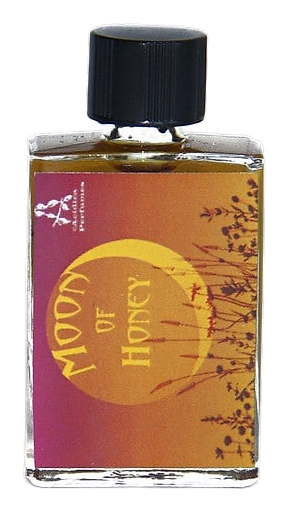
Moon of Honey is Elena Markova's love letter to Kupala Night, the midsummer festival celebrated across Eastern Europe when bonfires dot the riverbanks and wreaths float downstream. Released in 2016 under Acidica Perfumes, the fragrance captures that breathless midnight stretch when the fern supposedly blooms, granting the finder a year of luck. Markova doesn't bottle folklore as costume, though. She translates it into scent: herbs still warm from the field, resin thickening in the cooling air, and a sweetness that feels earned rather than poured. The honey in the title isn't sweetness for its own sake. It marks the presence of meadowsweet in the heart, the same wildflower whose name in so many Slavic languages carries the word for honey.
Spiraea, once called meadowsweet, is the quiet workhorse of the composition. Its delicate almond-honey facet underpins the heart without ever shouting. Around it, marigold brings its pungent, green-soaked character, while immortelle adds its curious maple-curry accord, the note that makes Moon of Honey feel less like a floral and more like a memory of one. Frankincense threads through the drydown like smoke drifting from a bonfire seen from across the water, grounding everything in something older than the holiday itself.
The evolution
The opening reads almost edible: orange zest and the dusty-sweet lift of marigold, bright enough to register as cheerful rather than heavy. Then the heart deepens. Spiraea's quiet almond-honey quality surfaces, but it's the immortelle that reshapes the whole arc, pulling the sweetness toward something closer to burnt sugar, dry grass, a whiff of fenugreek. As the hours pass the composition goes golden and resinous, the frankincense finally audible, and the orange is just a faint glow underneath, holding the brighter notes in memory. The drydown settles into something contemplative and rooted, the kind of scent that asks to be revisited rather than worn for others. It stays close to the wearer, a private register of herbs and resin that lingers on fabric long after the festival itself has burned out.
Cultural impact
Moon of Honey draws on the iconography of Kupala Night, the Slavic midsummer festival where bonfires line the rivers and young women send wreaths floating downstream to divine their futures. The composition translates that tradition into olfactory terms, using meadowsweet, immortelle, and frankincense to evoke the herbs, smoke, and golden warmth of the celebration. Rather than recreating the holiday literally, the fragrance works as a translation, an interpretation pitched at those who recognize the references and a discovery for those who don't.