
The Story
Why it exists.
The beginning
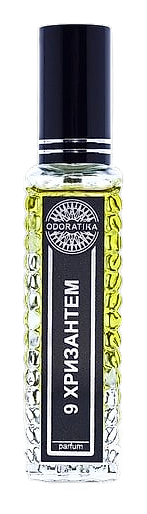
The name says everything. Nine chrysanthemums. Perfumer Valeriya Karmanova built this fragrance around that tension. Not the perfect bloom on the shelf, but the moment before it turns. The whole composition asks: what if the flower smelled more like the stem? The scent opens with crisp, dewy greens that recall the garden at first light, followed by a subtle resinous warmth that suggests the waxy petals. There is a quiet melancholy in the blend, an impression of petals just beginning to curl at the edges, captured before they fall.
What chrysanthemum offers is stranger and more honest than many florals: an aromatic, slightly bitter green with a powdery undertone that emerges as the flower blooms. Karmanova leaned into that duality. The result smells like the whole plant, not just the petals. It captures the crispness of stems, the faint sweetness of leaves, and the dusty depth of petals all at once. The interplay between green and powdery creates something that feels both fresh and deeply familiar, as if you've encountered this scent before in an old garden you only half-remember.
The evolution
The opening hits green and almost edible, like stems, green leaves, the smell of something growing. Musk warms the base from the first minute. Within thirty minutes the chrysanthemum softens and violet enters, shifting the whole composition toward powdery. The green does not disappear; it becomes the background to the flower's sweetness. By the final hours the composition settles into a quiet drydown where the initial brightness has mellowed into something softer. What remains is tender musk and the ghost of violet, close and intimate, lingering in a way that feels both delicate and persistent.
Cultural impact
The chrysanthemum note in this fragrance is unusual enough to attract enthusiasts looking for something outside the standard floral vocabulary. Collectors who gravitate toward botanical and green compositions have responded to its unconventional character. The scent stands apart from typical floral fragrances by treating the flower as a whole plant rather than a single prettified note. Its presence in the niche market suggests there is an audience hungry for compositions that challenge rather than simply please.