The Story
Why it exists.
The beginning
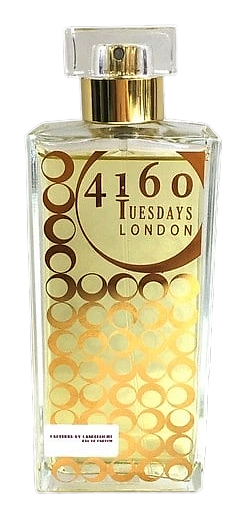
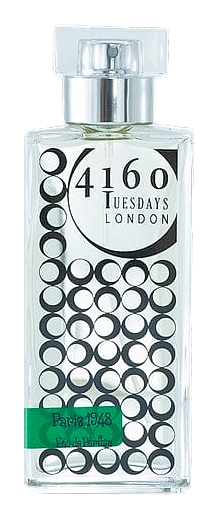
4160 Tuesdays calls their studio a laboratory, but Sarah McCartney calls it a conversation. Paris 1948 came from a question worth sitting with: what if you could wear the Paris of a specific autumn? Not a fantasy Paris. The real one. Post-war, rationing still a memory, but the cafés full again and perfume houses still deciding whether to follow the modern age or wait it out. McCartney chose 1948. That particular year sits between the old guard and what came next, a moment when French perfumery still trusted the chypre form but was beginning to understand its own nostalgia. She built this fragrance around that tension. The peach and grapefruit open bright, almost playful, but the structure underneath is deliberate. Oakmoss, labdanum, cedar. The bones of something that was already being mourned by 1950.
The chypre is a structural commitment. It requires a specific balance, the citrus top, the floral heart, the mossy base, and that balance has been quietly disappearing from perfume counters for decades. IFRA restrictions on oakmoss have nudged most modern fragrances away from the form entirely. What remains tends to be either a memory of chypre or an approximation. Paris 1948 goes the other direction. It doesn't hedge. The oakmoss is present and deliberate, not a cameo. Combined with labdanum, that resinous, slightly balsamic note from cistus, it creates a base that feels old in the best sense. Not dated. Old like a well-made thing that was built to last. The honey in the heart doesn't sweeten the structure.
The evolution
The opening is grapefruit and basil, sharp, bright, almost astringent. The peach sits underneath, soft and present but not dominant. For the first twenty minutes, this reads as a modern citrus. Then the florals arrive. Rose and orange blossom push through the citrus, and suddenly the structure tilts. The cedarwood announces itself. The honey doesn't sweeten so much as thicken. This is where the fragrance earns its vintage label, the heart has weight. It moves slowly. The oakmoss doesn't wait for the drydown to appear; it begins threading through the florals around the thirty-minute mark, adding a cool, green, slightly bitter undertone that keeps everything grounded. By hour two, the drydown is established. Oakmoss, labdanum, hay. Musk stays close to the skin. The sillage drops from moderate to intimate, present for the wearer, imperceptible to the room. On fabric, the oakmoss lingers into the next day. On skin, six to eight hours is the range. The cedar and honey dry into something resinous and warm, the peach a ghost on the finish.
Cultural impact
Paris 1948 sits in a small, intentional corner of the fragrance world, the revival of the classic chypre structure at a moment when most houses were softening toward ambroxan and musks. For wearers who grew up with Mitsouko or Aromatics Elixir, it reads as familiar ground. For younger noses, it can be an entry point into a form that predates the modern preference for linear, safe compositions. The fragrance doesn't announce itself loudly. It attracts people who are looking for something with a point of view, not just a pleasant smell.